


European rugby league finds its highest expression in the Super League, a competition that blends the sport’s working-class traditions with modern professional standards across clubs in England and one historic French outpost. Since its transformation from the old First Division in 1996, Super League has developed into a betting market with distinct characteristics that reward those willing to look beyond the more publicized Australian competition.
The Super League betting landscape differs fundamentally from its NRL counterpart. Smaller betting volumes create pricing inefficiencies that rarely exist in heavily traded Australian markets. The geographic concentration of clubs within Northern England generates intense local rivalries where emotional money distorts odds in predictable patterns. Weather conditions that Australians would consider unplayable remain standard operating environments for Super League clubs, demanding analytical adjustments unfamiliar to those who learned their craft on NRL markets.
This guide explores everything necessary for approaching Super League betting with confidence. From understanding the competition format and identifying which teams genuinely threaten for titles, through specific strategies addressing the unique characteristics of English rugby league, the information provided here establishes foundations for profitable engagement with a market that many bettors overlook entirely. The 2026 season brings fresh storylines and betting opportunities for those prepared to invest the attention this underappreciated competition deserves.
Super League Competition Overview

League Format and Structure
Super League operates with fourteen clubs competing across 27 regular season rounds, a format that ensures each team meets every opponent at least twice during the campaign. This structure produces a balanced fixture list where home and away matches against each rival create natural season splits that bettors can track for form assessment purposes.
The competition awards two points for victories with draws possible, unlike the NRL’s golden point system. These rare drawn matches create specific betting opportunities through “draw no bet” markets, particularly in fixtures between evenly matched opponents where normal conditions produce tight, low-scoring affairs. Understanding that Super League tolerates draws while NRL does not represents fundamental knowledge for anyone transitioning between the two competitions.
Points difference serves as the first tiebreaker for teams level on competition points, making margin victories significant beyond match outcomes. This creates situations late in the season where teams chasing ladder positions through points difference might maintain attacking intensity in matches they have already secured, affecting total points markets and handicap outcomes in ways that pure match winner betting would miss entirely.
Key Teams and Rivalries
The Super League landscape features entrenched rivalries born from geographic proximity and decades of shared history. These derbies consistently produce atmospheric matches where form analysis takes a backseat to psychological factors difficult to quantify but impossible to ignore. The West Yorkshire derbies pitting Leeds against Bradford, Wakefield, Castleford, and Huddersfield generate intense local interest that inflates betting volume and frequently distorts market prices.
Wigan Warriors carry the weight of history as one of Super League’s most successful clubs, their cherry and white hoops representing rugby league tradition since 1872. The Warriors’ rivalry with St Helens transcends ordinary competition, with these Lancashire neighbors producing matches that routinely feature higher intensity than their respective positions might suggest. Betting on Wigan versus St Helens fixtures requires acknowledging that statistical models underestimate the emotional amplification these matches generate.
Hull’s crosstown rivalry between Hull FC and Hull Kingston Rovers creates another distinct betting environment. These clubs share a city yet maintain fierce separation, with derby matches selling out regardless of either team’s season trajectory. The East Yorkshire derbies historically produce lower-scoring, tighter matches than each club’s typical output, creating systematic value in under markets and shorter handicap lines than seasonal averages might indicate.
Season Timeline
The Super League calendar runs from February through October, a schedule that subjects players and bettors alike to the full spectrum of English weather conditions. Opening rounds coincide with the tail end of winter, with February and March matches often contested in conditions that transform basic ball handling into genuine achievement.
Easter represents a pivotal period in the Super League calendar, with traditional fixtures across the four-day holiday creating compressed schedules that test squad depth. Teams playing Thursday, then again on Monday, face cumulative fatigue that compounds throughout the Easter program. Historical analysis reveals consistent patterns during this period, with clubs possessing genuine roster depth maintaining results while thinner squads suffer measurable performance declines.
The Magic Weekend, typically held in May or June at a neutral major city stadium, gathers all fourteen clubs for a festival round that removes home advantage entirely. These fixtures produce different betting dynamics than regular rounds, with neutral venue dynamics and concentrated scheduling creating opportunities for those who recognize how significantly the usual home advantage assumptions must be adjusted. The regular season concludes in September, feeding directly into the playoff series that determines the Grand Final participants.
Super League Betting Markets

Weekly Match Betting
Head-to-head match betting forms the core of Super League wagering, with markets opening mid-week following team announcements and adjusting through to kickoff based on injury updates, weather forecasts, and betting pattern analysis. The draw possibility adds complexity absent from NRL betting, with three-way markets offering match winner or draw outcomes that demand different probability assessment approaches.
Line betting in Super League follows similar principles to NRL markets, though typical handicaps trend smaller reflecting the tighter average margin victories the European competition produces. Where NRL lines regularly exceed fifteen points for mismatched fixtures, Super League bookmakers hesitate to establish comparable spreads given the competition’s historical tendency toward closer results. This compression benefits underdogs systematically, a pattern insufficiently recognized by bettors transferring expectations from Australian markets.
Total points markets require significant adjustment from NRL assumptions. Super League averages approximately 38-42 combined points per match, several points below NRL norms, with weather conditions creating substantial variation throughout the season. Early-season fixtures in February and March routinely settle under 35 total points, while summer rounds occasionally produce higher-scoring affairs when firm grounds and mild conditions allow attacking rugby to flourish.
Top Tryscorer Markets
Season-long top tryscorer betting opens before the first round and attracts interest throughout the campaign. Wingers dominate these markets, with prolific finishers on successful teams accumulating tries at rates inaccessible to players in other positions regardless of individual talent. Identifying which wingers will benefit from improved service or tactical adjustments creates value opportunities that pure historical analysis misses.
The market structure favors each-way betting approaches, with payouts on second, third, and sometimes fourth place providing insurance against the variance inherent in try-scoring. Injuries, form slumps, and unexpected competition for positions can derail even prolific scorers, making the each-way safety net particularly valuable for season-long propositions.
Match-specific tryscorer markets follow similar patterns to NRL equivalents, with first tryscorer offering elevated odds in exchange for timing precision while anytime tryscorer markets provide more realistic probability assessments. Understanding team attacking structures, identifying which players receive opportunities near the try line, and recognizing matchup advantages against particular defensive schemes collectively inform profitable tryscorer selection.
Super League Grand Final Betting
The Grand Final, traditionally held at Old Trafford in Manchester, represents Super League’s showcase event and its most heavily bet fixture. Markets extend well beyond match outcomes to include individual performance propositions, scoring sequences, and margin segments that create diverse approaches for any betting preference.
Steve Prescott Man of Steel betting, predicting the Grand Final’s outstanding performer, follows similar dynamics to NRL’s Clive Churchill Medal. Halfbacks and fullbacks dominate historical winners, with match-winning performances from these positions attracting voter recognition more readily than equally impactful forward efforts. When assessing Grand Final matchups, identifying which backs are positioned to produce standout performances improves Man of Steel selection considerably.
Grand Final margin betting deserves particular attention. The occasion’s significance historically produces tighter matches than regular season meetings between the same opponents, with conservative early approaches and pressure-induced errors compressing margins below normal expectations. Systematic value exists in backing margins under thirteen points, even when one team enters as substantial favorite based on season-long performance differentials.
Relegation and Promotion Markets
Super League operates without automatic relegation in its current format, eliminating traditional relegation betting markets familiar from football. However, licensing decisions, expansion discussions, and occasional format changes create uncertainty that generates speculative markets during periods of structural review.
The Championship, operating below Super League, occasionally feeds clubs into the top tier through promotion pathways when they exist. Betting on which Championship clubs might earn Super League status, when such pathways open, rewards attention to the second-tier competition that most Super League bettors ignore entirely. These markets offer substantial odds reflecting genuine uncertainty, with informed positions potentially yielding significant returns.
Market availability for these structural outcomes varies considerably between bookmakers. Specialized rugby league betting sites typically offer more extensive coverage than mainstream operators, whose Super League offerings focus predominantly on match-to-match wagering without the season-long structural propositions that reward deeper competition knowledge.
Analyzing Super League Teams

Title Contenders
St Helens have established themselves as the dominant force in contemporary Super League, their sustained excellence under various coaching regimes suggesting systemic advantages beyond individual player quality. The Saints’ betting profile reflects this dominance through compressed odds that rarely offer genuine value for match winner markets, though their consistency makes them reliable components in accumulator constructions where multiple selections combine.
Wigan Warriors remain perpetual contenders, their blend of traditional forward power with modern attacking width creating matchup problems for most opponents. Wigan’s betting approach differs from St Helens in that their playing style produces greater variance. The Warriors can dominate physically imposing contests one week then struggle against mobile opponents who deny their direct approach the following round.
Warrington Wolves and Leeds Rhinos complete the typical title picture, though their credentials fluctuate more substantially between seasons depending on roster composition and coaching stability. These clubs possess the financial resources and supporter bases to attract quality players, yet both have experienced extended periods of underachievement relative to expectations. Identifying which version of these clubs will appear in any given season represents one of Super League betting’s recurring analytical challenges. See also the complete Super League guide.
Dark Horses and Value Teams
The middle tier of Super League, typically comprising clubs finishing sixth through ninth, provides the most fertile territory for value betting. These teams possess sufficient quality to defeat anyone on favorable days while carrying odds that reflect their overall inconsistency. Catalans Dragons, representing French rugby league in Perpignan, exemplify this category through performances that swing dramatically between brilliant and bewildering.
Hull Kingston Rovers have emerged as a consistent value proposition in recent seasons, their development trajectory suggesting capability exceeding current market perception. When clubs demonstrate improvement curves that bookmakers have not yet fully incorporated into pricing, systematic advantages exist for those tracking these trends attentively.
Identifying genuine improvement versus unsustainable hot streaks requires patience through early season rounds. By Round 12, sufficient data accumulates to distinguish clubs genuinely ascending from those whose strong starts reflect fixture kindness rather than fundamental quality enhancement. The second half of the Super League season rewards those who invested early-season attention in tracking development patterns.
Traditional Powerhouses
Bradford Bulls’ fall from Super League prominence represents the competition’s starkest warning about assuming historical dominance guarantees future relevance. Once the competition’s leading club with four titles between 2001 and 2005, Bradford’s subsequent financial difficulties and relegation demonstrate how quickly circumstances can shift.
This history matters for betting purposes because market assessments sometimes lag behind actual circumstances, both positively and negatively. Clubs with proud histories sometimes receive residual respect their current rosters no longer warrant, creating opportunities for those willing to oppose reputation. Conversely, fallen giants occasionally mount genuine recoveries that markets initially dismiss as unlikely, offering value at longer odds before recognition catches up.
Tracking off-field stability proves essential for assessing traditional powerhouses attempting comebacks. Financial solidity, coaching continuity, and administrative competence create conditions where on-field recovery becomes possible. Clubs lacking these foundations, regardless of historical prestige, typically disappoint even when optimistic early-season results suggest turnaround potential.
Super League Betting Strategies
Northern England Weather Factor
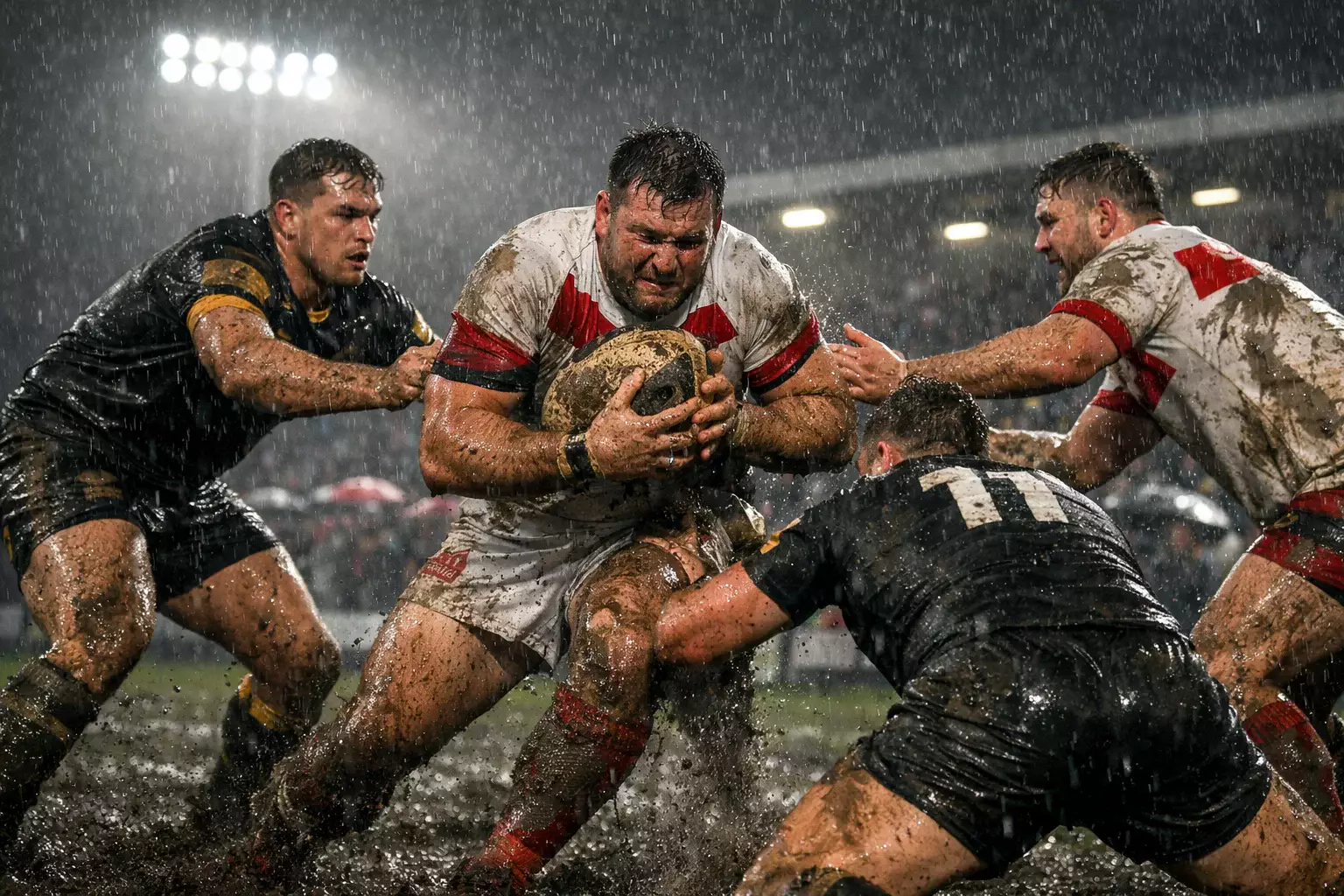
Weather fundamentally shapes Super League betting in ways unfamiliar to those approaching from NRL backgrounds. The competition’s concentration in Northern England exposes matches to conditions ranging from frozen February pitches to waterlogged autumn fixtures, with implications extending well beyond simple total points adjustments.
Rain affects Super League matches more consistently than NRL equivalents because the English climate delivers more frequent precipitation across longer portions of the season. Building weather-aware models requires historical data on how specific teams perform in wet conditions, as some clubs adapt their playing styles effectively while others struggle disproportionately when ball handling becomes compromised.
Wind receives insufficient attention from most Super League bettors despite materially affecting outcomes at exposed venues. Coastal grounds and stadiums without surrounding structures experience crosswinds that render certain tactical approaches ineffective. When forecasts predict sustained strong winds, adjusting expectations for teams reliant on kicking games versus those comfortable with direct ball-carrying approaches creates edges available to anyone willing to consult weather data before finalizing selections.
Fixture Congestion Impact
The Super League calendar creates periods of fixture congestion that systematically affect betting outcomes. Easter’s traditional four-day program produces the most pronounced effects, but international windows, cup competition scheduling, and postponement rescheduling generate additional compressed periods throughout the season.
Squad depth becomes the critical variable during congested periods. Clubs with genuine quality beyond their starting thirteen maintain performance levels while thinner squads suffer measurable declines. Tracking how teams have performed historically during congested fixture runs, and assessing whether current roster depth exceeds or falls short of those historical squads, informs betting during these pivotal periods.
Recovery time between matches matters more than raw fixture count. Teams facing Tuesday-to-Friday turnarounds suffer greater disadvantage than those with Friday-to-Tuesday windows despite similar five-day gaps. Understanding how specific coaches manage rotation, rest, and selection during congested periods reveals patterns that inform betting on individual fixtures within these challenging sequences.
European vs Australian Style Analysis
Super League clubs increasingly recruit Australian players and coaches, importing tactical approaches that sometimes clash with traditional English styles. This stylistic tension creates betting opportunities when matchups pit direct, physical European approaches against more expansive, skill-oriented game plans.
Understanding which clubs have successfully integrated Australian influences versus which struggle with stylistic confusion improves prediction accuracy. Teams with coherent identities, whether traditionally English or Australian-influenced, typically perform more consistently than those attempting uncomfortable hybrids. Betting against clubs showing signs of stylistic uncertainty, particularly early in coaching tenures when integration challenges peak, offers systematic advantages.
The physical demands of Super League favor robust forward packs capable of absorbing punishment through long seasons in difficult conditions. Australian imports sometimes struggle with the accumulated physical toll in ways that emerging match data reveals but season-long reputations mask. Tracking which imports maintain performance through English winters versus which fade creates intelligence valuable for second-half season wagering.
Challenge Cup Betting Integration
Cup Competition Dynamics
The Challenge Cup operates alongside Super League, providing knockout rugby league from January through May with the final traditionally held at Wembley Stadium. This historic trophy attracts betting interest distinct from league wagering, with single-elimination dynamics creating different analytical requirements than the accumulating points of regular season competition.
Early Challenge Cup rounds feature mismatches between Super League clubs and amateur or semi-professional opponents, with handicaps sometimes exceeding fifty points. These fixtures attract limited betting interest given predictable outcomes, though player performance markets occasionally offer value when Super League stars face minimal opposition certain to allow statistical accumulation.
The later rounds, when Super League clubs face each other exclusively, produce genuinely competitive betting environments. Cup football dynamics, where single-match elimination raises stakes beyond league consequences, generate different performances than the teams’ regular season meetings might suggest. Historical cup form proves a meaningful predictor, with some clubs consistently raising their game in knockout environments while others routinely underperform their league standards.
Lower League Upset Potential
Championship clubs occasionally produce genuine Cup upsets against Super League opposition, creating volatile betting markets during the rounds where these mismatches occur. Identifying which Championship sides possess legitimate threat requires attention to the second tier that most Super League bettors neglect.
Promoted clubs offer particular interest when facing immediate Cup challenges against familiar opponents. Teams that earned Championship titles the previous season carry confidence and cohesion into early-season Cup fixtures, sometimes producing results that raw league position comparison would classify as improbable.
Betting strategy for potential upset fixtures benefits from market timing awareness. Opening lines heavily favor Super League clubs, with prices adjusting only if significant money backs the Championship side. Positioning early on credible upset candidates, before potential line movement erodes value, rewards those willing to express conviction when general market sentiment remains dismissive.
Expert Super League Betting Tips

Season-Long Approach
Profitable Super League betting extends beyond weekly match predictions to encompass season-spanning strategies that compound small edges across many decisions. Establishing betting bank management protocols, tracking results systematically, and reviewing performance honestly all contribute more to long-term outcomes than any single selection insight.
Pre-season analysis deserves investment disproportionate to its immediate application. Understanding roster changes, coaching appointments, and pre-season trial indications establishes baselines that inform assessment throughout the coming campaign. Bettors who invest January and February in analytical preparation outperform those who react to each round without accumulated context.
Specialization offers advantages in Super League betting that diffuse attention cannot match. Rather than spreading modest analytical capacity across all fourteen clubs, focusing intensively on specific teams, rivalries, or market types builds expertise that translates into genuine prediction edges. Becoming the most knowledgeable bettor regarding a particular subset of fixtures generates more value than superficial familiarity with the entire competition.
Live Betting Opportunities
Super League broadcasts provide live betting access throughout matches, with in-play markets adjusting continuously based on scoreline, time remaining, and betting pattern analysis. These live markets create opportunities distinct from pre-match betting, rewarding those capable of processing unfolding match information more accurately than algorithms driving automated odds adjustments.
Momentum shifts prove particularly significant in Super League live betting. The competition’s tendency toward lower-scoring, tighter matches means that single tries or successful penalty goals create larger proportional scoreline changes than equivalent NRL events. Recognizing when momentum has genuinely shifted versus when single scores represent isolated events rather than trend changes distinguishes profitable live bettors from those who overreact to momentary fluctuations.
Weather developments during matches create live betting edges unavailable pre-match. When rain begins falling mid-match, live total points markets adjust, but the magnitude of adjustment sometimes underestimates how dramatically conditions will affect remaining play. Similarly, deteriorating pitch conditions as matches progress affect teams differently depending on their reliance on footwork versus power, creating late-match handicap opportunities for attentive observers.
Super League Betting Guide Summary and How to Bet on English Rugby League
Super League betting rewards those willing to engage with a competition that many casual punters overlook entirely in favor of more publicized Australian action. The market inefficiencies created by lower betting volumes, combined with distinct competitive dynamics shaped by English weather and traditional rivalries, generate opportunities unavailable in more efficient markets.
The analytical frameworks presented throughout this guide provide starting points for systematic Super League engagement. Understanding the competition structure, recognizing which teams genuinely contend versus those trading on historical reputation, and adjusting strategies for weather impacts and fixture congestion collectively establish foundations for profitable wagering. The Challenge Cup integration adds knockout dynamics that further differentiate Super League betting from pure league format analysis.
Success requires patience across the lengthy European season. Building detailed records, tracking specific teams or markets intensively, and maintaining disciplined stake management through inevitable variance periods all matter more than any single match insight. Those who approach Super League betting as a long-term analytical exercise rather than entertainment gambling position themselves to extract value that more casual engagement inevitably leaves unexploited.
Responsible gambling practices remain paramount regardless of analytical sophistication. The strategies discussed here aim to improve outcomes within reasonable entertainment budgets, not to encourage financial risk beyond comfortable levels. Super League runs from February through October, providing ample opportunity to engage thoughtfully with one of rugby league’s historic competitions while maintaining healthy perspective on what betting should and should not represent in a balanced life. Super League betting on rugby league betting.
