


Handicap betting represents the most sophisticated approach to rugby league wagering, transforming predictable mismatches into genuinely competitive propositions where analytical skill determines outcomes more than blind luck. While casual bettors gravitate toward simple match winner markets, serious punters recognize that handicap betting, known variously as line betting or spread betting depending on geographic terminology, offers superior value and more consistent opportunities for profit across the NRL, Super League, and international rugby league calendar.
The fundamental appeal of handicap betting lies in its equalization effect. When Penrith Panthers face a struggling club, match winner odds might offer 1.15 on the favorite, requiring enormous stakes for modest returns while carrying genuine upset risk. The handicap market reframes this mismatch by asking whether Penrith will win by more than, say, eighteen points. Suddenly the bet becomes intellectually engaging, demanding assessment of motivation levels, bench utilization, and whether the favorite will maintain intensity throughout or ease off after establishing control.
This guide provides comprehensive coverage of rugby league handicap betting from foundational concepts through advanced strategies. Understanding how bookmakers establish lines, recognizing when movement creates value, and developing frameworks for assessing spread coverage probability collectively transform handicap betting from gambling into informed decision-making. The 2026 season offers abundant opportunity for those who master these concepts, with weekly fixtures across multiple competitions providing continuous chances to apply analytical rigor to one of sports betting’s most rewarding markets. See also the handicap betting guide.
What is Handicap Betting in Rugby League?
Handicap Betting Fundamentals
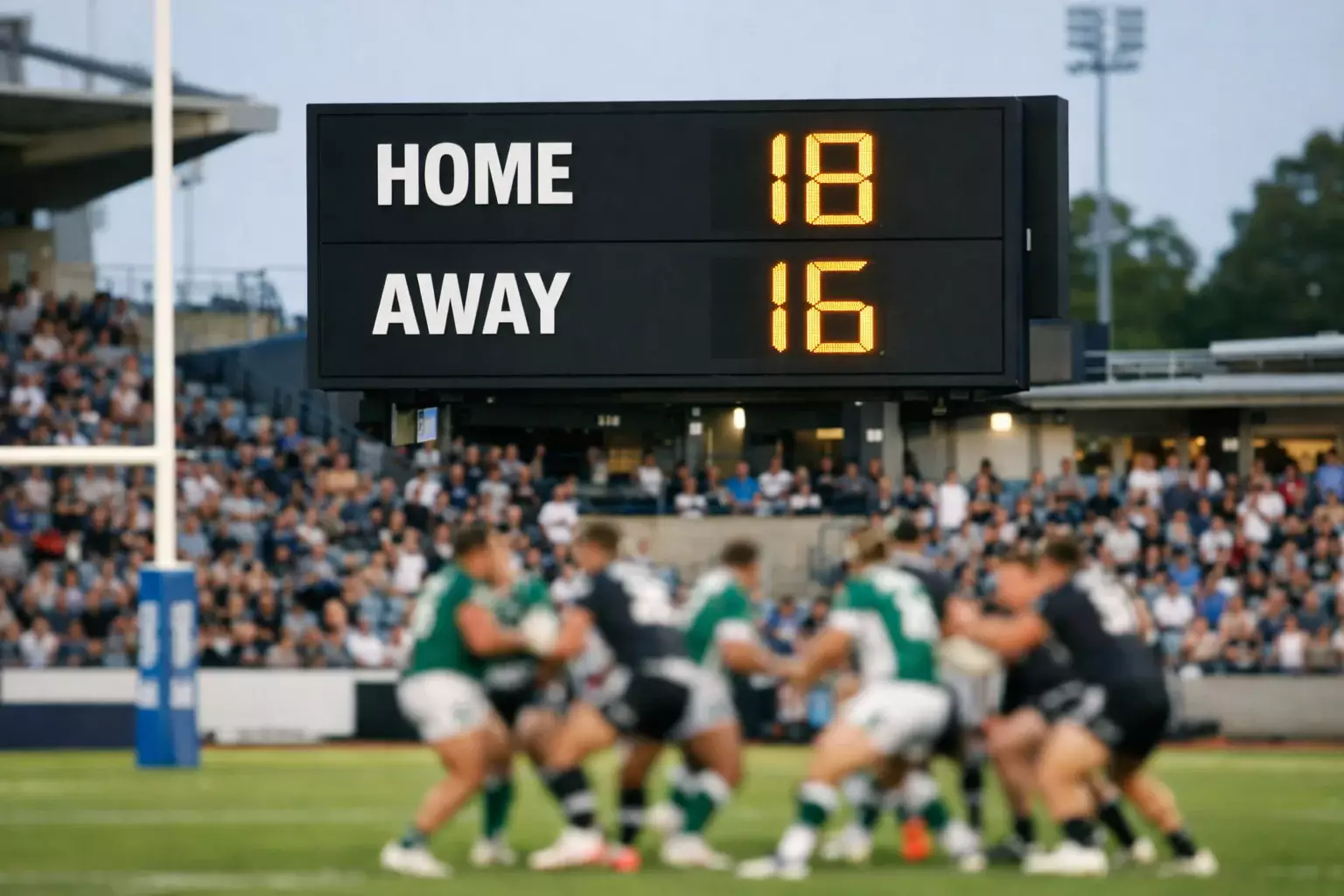
Handicap betting artificially adjusts the scoreline before kickoff to create balanced betting propositions. The favored team receives a negative handicap, meaning points are subtracted from their final score for betting purposes, while the underdog receives a positive handicap that adds points to their actual result. The adjusted scores determine which side covers the spread and wins the bet.
Consider a match where Melbourne Storm faces Gold Coast Titans with a handicap line of -14.5 for Melbourne. If the Storm wins 28-12, their adjusted score becomes 13.5 (28 minus 14.5) against Gold Coast’s actual 12 points. Despite Melbourne winning comfortably on the field, they failed to cover the spread, and bets on Gold Coast +14.5 would collect. This mechanism ensures that both sides of any handicap bet attract roughly equal action, with bookmakers profiting from the margin built into odds rather than needing one outcome to prevail.
The half-point in most rugby league handicaps eliminates push possibilities where the margin exactly matches the line. Rugby league scoring in multiples of four (tries) and two (conversions) with occasional single-point field goals means certain margins occur far more frequently than others. Bookmakers set lines at half-points specifically to avoid the complicated refund scenarios that whole-number lines would create. This design choice simplifies betting but also reveals something about how seriously bookmakers approach rugby league markets, with considerable thought invested in line construction.
Positive vs Negative Handicaps
Understanding handicap notation prevents costly confusion when placing bets. Negative handicaps apply to favorites and represent the points that team must win by to cover the spread. A team listed at -8.5 must win by nine or more points for bets on them to succeed. The larger the negative handicap, the more dominant bookmakers expect that team to perform.
Positive handicaps favor underdogs by adding virtual points to their final score. A team receiving +8.5 can lose by up to eight points and still cover the spread for betting purposes. This positive adjustment allows bettors to back teams expected to lose while still having realistic paths to betting success. The underdog does not need to win outright, merely stay within the specified margin.
The relationship between handicap size and implied probability deserves careful attention. Larger handicaps suggest greater expected dominance but also introduce more variance into outcomes. A team favored by three points needs only modest superiority to cover, while a team favored by twenty points requires sustained excellence against an opponent who may have nothing to lose. This variance differential means that small handicaps and large handicaps require different analytical approaches despite sharing underlying mechanical principles.
How Bookmakers Set Lines
Bookmakers employ sophisticated models to establish opening handicap lines, incorporating power ratings, recent form, head-to-head history, venue factors, and injury information into probability assessments. These models generate expected winning margins that become the basis for initial lines, though the final numbers often adjust slightly to account for anticipated betting patterns and liability management concerns.
The opening line represents the bookmaker’s best estimate of the margin that will attract equal money on both sides. This is not necessarily their assessment of the most likely outcome but rather their prediction of where balanced action will occur. These concepts differ subtly but importantly. If bookmakers believe public perception overrates a particular team, they may shade the line slightly against that team, knowing recreational money will still flow to the perceived stronger side.
Line adjustments following initial release reveal market sentiment and sharp money influence. When lines move significantly before kickoff, this movement typically indicates that professional bettors have identified value on one side, prompting bookmakers to adjust. Tracking these movements provides insight into where informed money flows, though following line movement blindly without understanding the reasoning risks chasing positions that sophisticated bettors established at more favorable prices.
Types of Rugby League Handicap Bets

Standard Handicap Betting
Standard handicap betting offers a single line for each match, typically set at the half-point to eliminate pushes. This market represents the most liquid handicap option, attracting the highest betting volume and consequently the tightest margins between bookmaker odds. For most punters, standard handicap betting provides sufficient flexibility without the complexity of alternative structures.
The standard line generally reflects the median expected margin based on bookmaker modeling. Betting this line means accepting the market’s consensus view on appropriate handicap size, then assessing whether the favorite or underdog offers value at the associated odds. Odds on each side of standard handicaps typically hover near 1.90 to 1.95, with the small gap representing bookmaker margin.
Timing matters considerably for standard handicap betting. Lines established early in the week may shift several points by kickoff based on team news, weather developments, and betting activity. Bettors confident in early assessments can lock in favorable positions before line movement, while those preferring maximum information accept that waiting costs them first-mover advantage. Neither approach is universally superior, with optimal timing depending on individual circumstances and information sources.
Asian Handicap Rugby League
Asian handicap betting, more common in football but increasingly available for rugby league, introduces split handicaps that divide stakes across two lines when the primary handicap falls on whole numbers. A bettor backing a team at -12.0 Asian handicap effectively splits their wager between -11.5 and -12.5 lines, winning fully if the team wins by thirteen or more, losing fully if they win by eleven or fewer, and winning half while pushing on the other half if the exact margin lands on twelve.
This structure provides insurance against exact margin outcomes that standard handicaps handle through half-point lines. The Asian handicap approach appeals to bettors uncomfortable with the binary nature of standard handicaps, where missing by a single point produces identical losses to missing by twenty. The partial win and loss scenarios create smoother variance curves that some bettors find psychologically preferable.
Rugby league’s scoring structure makes Asian handicaps particularly relevant. The prevalence of converted tries creates clusters of common margins at multiples of six, with twelve-point margins especially frequent when one team scores two more converted tries than their opponent. Asian handicaps at these common margins allow bettors to position around clustered outcomes rather than accepting binary exposure to either side of the cluster.
Alternative Line Betting
Alternative lines allow bettors to select handicaps different from the standard market line, accepting adjusted odds that reflect the changed probability implied by the modified spread. A team favored by ten points on the standard line might be available at -6.5 with shorter odds or -14.5 with longer odds, providing flexibility for bettors with specific views on margin ranges.
Buying points by taking smaller handicaps than the standard line reduces risk but compresses potential returns. This approach suits bettors who believe a favorite will win comfortably but harbor uncertainty about covering large spreads. The reduced handicap provides cushion against late opposition scoring or conservative game management from teams protecting leads.
Selling points through larger handicaps increases both risk and potential reward. Bettors confident that a dominant team will produce blowout victories can capture enhanced odds by accepting wider spreads. This aggressive positioning requires conviction that the favorite’s superiority extends beyond market consensus expectations, making it suitable for matches where strong analytical signals suggest the standard line underestimates the expected margin.
Reading and Understanding Lines
Line Movement Explained
Lines move when betting action creates imbalances that expose bookmakers to unacceptable liability on one outcome. Initial line releases reflect model-based estimates, but subsequent movement incorporates real-world betting data that may reveal flaws in those initial assessments. Sharp bettors who consistently beat closing lines force bookmakers to respect their positions, creating movements that less informed bettors then observe.
The timing and magnitude of line movement conveys different information. Early movement, occurring shortly after lines open, typically indicates sharp money from professional bettors who identified value in opening numbers. These early movers often have access to information or analytical capabilities that allow rapid assessment before markets equilibrate. Late movement, particularly in the hours before kickoff, more often reflects injury news, weather changes, or public money flooding in on popular sides.
Reverse line movement, where lines move opposite the direction that public betting percentages would suggest, signals sharp money overwhelming recreational action. If seventy percent of bets back the favorite but the line moves toward the underdog, this indicates that the thirty percent on the underdog wagered substantially larger amounts, revealing where professional money positioned. Recognizing reverse line movement helps identify games where sophisticated bettors oppose popular sentiment.
Identifying Value in Handicap Markets
Value exists when true probability exceeds implied probability reflected in offered odds. For handicap betting, this means identifying games where your assessed likelihood of covering the spread surpasses what the odds suggest. A team at -7.5 with odds implying forty-eight percent coverage probability offers value if your analysis indicates fifty-three percent likelihood of covering.
Developing accurate probability assessments requires systematic approaches rather than intuitive feel. Building models that incorporate relevant variables, whether simple power ratings or complex multi-factor systems, imposes discipline that prevents cognitive biases from distorting judgment. Even basic models that consistently apply defined criteria outperform gut reactions over large sample sizes.
Comparing your assessments against multiple bookmaker lines reveals where opportunities concentrate. If your model suggests a team should be favored by eight points but multiple books offer them at -5.5, the discrepancy warrants investigation. Either your model has identified genuine value or contains errors requiring correction. Tracking predictions against outcomes over time reveals whether consistent discrepancies translate into actual profits or indicate model calibration issues.
When Lines Move Against You
Establishing positions before adverse line movement creates situations where your bet appears worse than currently available alternatives. A bettor who backed a team at -10.5 watching the line move to -7.5 faces psychological discomfort despite their bet remaining potentially sound. Managing these situations emotionally and strategically distinguishes experienced bettors from novices who panic at unfavorable movement.
Line movement after your bet does not change the fundamental value that motivated your original position. If your analysis identified the team as undervalued at -10.5, that assessment does not become invalid because others subsequently moved the line. The movement might indicate you were correct about value and that market has now corrected, or it might reflect new information you did not possess. Distinguishing these scenarios matters for learning but not for managing existing positions.
Hedging opportunities sometimes arise when significant line movement occurs. If you backed a favorite at -14.5 and the line moves to -8.5 before kickoff, backing the underdog at the new line creates guaranteed profit or reduced loss scenarios regardless of outcome. Whether hedging makes sense depends on the magnitude of movement, current odds, and your confidence in the original position. Systematic hedging based on arbitrary movement thresholds typically erodes returns, while selective hedging in extreme circumstances can protect against variance.
Handicap Betting Strategies

Covering the Spread Analysis
Predicting spread coverage requires different analytical emphasis than predicting match winners. Teams that win consistently but by modest margins produce poor handicap results when lines exceed their typical victory margins. Conversely, teams that alternate between blowout wins and competitive losses may cover spreads at higher rates than their overall winning percentage suggests when receiving points.
Situational factors that affect margin more than outcome deserve particular attention. Teams with nothing to play for often fail to cover large spreads against desperate opponents fighting for playoff positions, even when their superior talent produces victories. Late-season matches between eliminated teams and contenders frequently see the contender win but the eliminated team cover, as motivation asymmetry affects intensity more than it affects results.
Coaching tendencies influence spread coverage patterns significantly. Aggressive coaches who pursue maximum margins create favorable handicap profiles for their teams when favored, while conservative coaches who protect leads after establishing control frequently fail to cover spreads their talent levels would otherwise suggest. Identifying these tendencies through historical analysis reveals systematic patterns exploitable across multiple fixtures.
Home vs Away Handicap Trends
Home field advantage affects handicap betting through mechanisms beyond simple win probability increases. Home teams not only win more often but typically win by larger margins when they do prevail, while their losses tend to be closer than away defeats. This asymmetric pattern has direct handicap implications that standard modeling sometimes underweights.
Quantifying home advantage varies by competition and specific venue. NRL home advantages average roughly three to four points depending on calculation methodology, but individual grounds produce substantially larger or smaller effects. Teams playing at intimidating fortresses with hostile crowds enjoy advantages exceeding generic estimates, while teams sharing neutral suburban grounds may receive minimal boost.
Travel considerations compound venue effects in ways that handicap lines sometimes insufficiently capture. Interstate visitors in NRL competition face accumulated disadvantages including flight fatigue, time zone adjustment, and climate differences that depress performance beyond typical away impacts. When these factors align against a team already receiving modest points on the handicap line, systematic value sometimes emerges for those tracking situational variables comprehensively.
Big Favorites vs Underdogs
Large handicaps introduce dynamics absent from closer lines. Teams favored by twenty or more points face reduced motivation after establishing control, often resting key players or experimenting tactically once outcomes become certain. These late-game factors systematically reduce margins below potential maximums, benefiting underdog spread bets even in comprehensive defeats.
Underdog teams facing massive deficits sometimes exceed expectations through effort advantages that narrow margins without threatening results. Pride, professional standards, and individual performance motivations drive players to compete even in hopeless situations. This baseline resistance establishes floors beneath which margins rarely fall regardless of talent differentials.
The distribution of outcomes in blowout-expected matches follows patterns that favor underdog handicap positions. While favorites occasionally produce historic routs that exceed even large handicaps comfortably, more frequently they win by margins clustered somewhat below maximum expectations. This asymmetric distribution, where the worst-case underdog handicap scenario happens less often than the best-case scenario, creates systematic edges worth incorporating into handicap strategy.
Live Handicap Betting
Live handicap markets adjust continuously during matches, with lines recalculating based on current score, time remaining, and in-game developments. These dynamic lines create opportunities to enter positions at values unavailable pre-match or to adjust existing positions based on unfolding match circumstances.
Early scoring that does not reflect underlying match dynamics creates live handicap value. A try from a lucky bounce or defensive lapse that puts a team ahead early often triggers line movements that overreact to score changes. If the trailing team remains the superior side despite the deficit, their live handicap may offer value that pre-match markets did not provide.
Momentum recognition proves essential for live handicap success. Identifying when one team has seized control despite modest scoring allows positioning before lines fully adjust to the shift in match dynamics. Conversely, recognizing when early dominance is unsustainable prevents chasing positions on teams likely to regress as matches progress. This real-time assessment skill develops through extensive match viewing combined with conscious attention to factors beyond mere scoreboard watching.
Competition-Specific Handicap Tips

NRL Handicap Patterns
The NRL produces handicap betting patterns shaped by the competition’s structure and team quality distribution. Matches between top-four teams and bottom-four opponents frequently feature handicaps exceeding fifteen points, with outcomes clustered around margins that sometimes fail to reach these ambitious lines. This pattern creates systematic value on underdogs in expected blowouts, particularly when eliminated teams face playoff-bound opponents late in the season.
Thursday night matches historically produce different handicap outcomes than weekend fixtures, with the heightened visibility and prime broadcast slot creating atmospheres that favor tighter contests regardless of pre-match expectations. Bettors tracking day-of-week patterns find that Thursday night favorites cover at lower rates than their Saturday afternoon counterparts, a discrepancy worth incorporating into NRL handicap strategy.
Finals football transforms handicap dynamics entirely. The intensity and preparation levels in playoff matches compress margins below regular season norms, even when the same opponents met with larger margins during the season. Historical analysis confirms that backing underdogs against the spread in NRL finals produces positive returns over extended samples, as favorites struggle to replicate dominant regular season form under elimination pressure.
Super League Handicap Trends
Super League’s characteristics create distinct handicap patterns from Australian competition. The English game’s traditionally forward-oriented style and weather impacts produce lower-scoring matches with compressed margins compared to NRL norms. Lines in Super League consequently trend smaller, with double-digit handicaps relatively rare outside matches involving the competition’s weakest teams.
Regional derbies in Super League consistently produce tighter results than season-long form suggests, as local pride and intense atmospheres elevate underdog performances. The Lancashire and Yorkshire derbies particularly demonstrate this pattern, with teams receiving points covering at elevated rates when facing traditional rivals regardless of league position disparities. Building derby-specific adjustments into Super League handicap analysis captures value that generic models overlook.
Weather sensitivity affects Super League handicap betting more substantially than in the NRL. Wet and windy conditions that occur frequently in Northern England suppress scoring and compress margins, typically benefiting underdog handicap positions. Checking forecasts before finalizing Super League handicap selections allows adjustment for conditions that significantly affect expected margins.
International Match Handicaps
International rugby league features handicap lines spanning enormous ranges, from competitive trans-Tasman clashes between Australia and New Zealand to mismatches where Pacific Island nations face tier-one opposition receiving forty or more points. This variation demands flexible approaches that recognize different dynamics at different ends of the handicap spectrum.
Test matches between evenly matched nations produce tight, intense contests where small handicaps often determine betting outcomes through single scoring plays. The pressure of international representation and unfamiliar combinations sometimes creates lower-scoring affairs than club form might suggest, benefiting under positions in totals markets and underdog positions on tight handicap lines.
World Cup and tournament betting introduces additional considerations including squad depth through multi-game campaigns and the psychological weight of knockout stages. Favorites in elimination matches sometimes fail to cover spreads as conservative approaches prioritize progression over margin maximization. Meanwhile, group stage matches against overmatched opponents may see dominant nations run up scores that comfortably exceed handicap lines against demoralized opposition.
Common Handicap Betting Mistakes

Chasing Bad Lines
Bettors who establish target positions sometimes chase lines that have moved against them, accepting inferior prices rather than acknowledging missed opportunities. This behavior reflects emotional attachment to specific bets rather than rational value assessment. If a line moved because sharp money identified value at the original number, the current line may no longer offer positive expected value regardless of your initial analysis.
Discipline requires accepting that some identified opportunities will expire before execution. Markets move precisely because value exists, and competing for that value against sophisticated participants means sometimes arriving too late. Establishing processes for rapid line assessment and execution minimizes missed opportunities, but accepting some portion of identified value will escape capture maintains emotional equilibrium when lines move adversely.
The compulsion to bet identified games regardless of line movement often produces negative expectation wagers. Forcing positions at unfavorable prices erodes the edges that careful analysis generates, transforming potentially profitable approaches into losing strategies through execution failures. Learning to pass on games where value has evaporated proves as important as identifying value initially.
Ignoring Key Factors
Handicap bettors sometimes fixate on statistical models while ignoring situational factors that affect margin outcomes. Motivation levels, lineup changes announced after line setting, and weather developments all influence margins in ways that historical data cannot fully capture. Integrating these qualitative factors with quantitative analysis produces more accurate assessments than either approach alone.
Team news in particular demands attention between line release and kickoff. Late scratches of key players may not trigger line movements commensurate with their actual impact, particularly for players whose influence extends beyond statistics. A halfback withdrawal affects team function more than a winger’s absence despite similar positional status, yet lines may adjust similarly for both scenarios.
Overlooking scheduling context produces systematic errors in handicap assessment. Teams playing third games in eight days, returning from interstate travel, or facing opponents with extended preparation advantages all face headwinds that affect margin outcomes. Building comprehensive situational databases allows pattern recognition across factors that casual observers might dismiss as irrelevant.
Over-relying on Historical Data
Historical head-to-head results provide useful context but can mislead when applied uncritically to current fixtures. Teams evolve between meetings through roster changes, coaching adjustments, and form fluctuations that render previous results partially obsolete. A team that covered a twelve-point spread in the corresponding fixture last season may have changed sufficiently that the same line now represents poor value.
Recent results carry more predictive weight than distant history, yet bettors sometimes anchor on memorable past outcomes despite intervening changes. The psychological salience of unexpected blowouts or shocking upsets can distort perception of current probabilities, leading to position sizes and confidence levels misaligned with actual expected outcomes.
Sample size limitations plague rugby league handicap analysis more severely than in higher-frequency sports. A team’s spread coverage rate across twenty previous matches against a single opponent reflects considerable variance alongside genuine patterns. Distinguishing signal from noise in limited samples requires statistical literacy and appropriate humility about the precision of historical extrapolations.
Rugby League Handicap Betting Summary and How to Find Value on Spread Markets
Handicap betting elevates rugby league wagering from simple outcome prediction to nuanced margin assessment where analytical skill provides genuine edges. The concepts and strategies outlined throughout this guide establish foundations for approaching line betting with the sophistication that consistent profitability demands.
Understanding how bookmakers set lines, recognizing the information embedded in line movements, and developing systematic approaches to spread coverage assessment collectively transform handicap betting from gambling into informed analysis. The variety of handicap structures available, from standard lines through Asian handicaps and alternative lines, provides flexibility to express views with precision matching confidence levels.
Competition-specific patterns in NRL, Super League, and international rugby league reward attention to the distinct dynamics each environment produces. Avoiding common mistakes around line chasing, factor integration, and historical over-reliance protects against errors that erode edges generated through careful analysis. The rugby league calendar provides weekly opportunities to apply these concepts across matches spanning vastly different handicap ranges.
Responsible engagement remains essential regardless of analytical capability. Handicap betting should enhance enjoyment of rugby league competition through intellectual engagement rather than create financial stress. Appropriate stake sizing, honest result tracking, and willingness to step back when outcomes frustrate all contribute to sustainable approaches that allow handicap betting to remain a rewarding long-term pursuit. League handicap on rugby league betting.
