


Rugby league betting has quietly evolved into one of the most engaging corners of the sports wagering world. While football and basketball command the spotlight in mainstream betting discourse, rugby league offers something different: a high-scoring, physically demanding sport where momentum swings can turn a comfortable lead into a nail-biting finish within minutes. For bettors willing to invest the time in understanding its nuances, rugby league presents genuine opportunities that more saturated markets simply cannot match.
The sport's betting landscape has expanded dramatically over the past decade. The NRL in Australia consistently draws massive wagering volumes, with the 2025 Grand Final alone generating hundreds of millions in turnover across regulated markets. Super League in Europe has followed a similar trajectory, attracting both domestic and international bettors who appreciate the distinct flavor of Northern Hemisphere rugby league.
This guide exists because most rugby league betting content falls into two camps: superficial overviews that tell you nothing useful, or bookmaker promotional material dressed up as advice. What follows is a comprehensive examination of rugby league betting, from foundational concepts to advanced strategies. You will learn how different markets work, why certain competitions offer better value than others, and how to develop an analytical framework that gives you a genuine edge. The principles apply whether you are betting ten dollars or ten thousand.
Understanding Rugby League Betting Basics

How Rugby League Betting Works
The mechanics of rugby league betting mirror other sports at their core, but the sport's unique characteristics create distinct considerations that bettors must understand. At its most fundamental level, you are predicting outcomes and staking money on those predictions at odds determined by bookmakers. The odds represent both the implied probability of an outcome and the return you will receive if your prediction proves correct.
Odds formats vary by region and platform. Decimal odds, predominant in Australia and Europe, show your total return including stake. If you bet ten dollars at 2.50 odds and win, you receive twenty-five dollars total. Fractional odds, still common in the United Kingdom, express profit relative to stake, so 3/2 means you profit three dollars for every two dollars staked. American odds use positive and negative numbers relative to a hundred-dollar baseline. Converting between formats becomes second nature with practice, but decimal odds offer the most intuitive approach for calculating returns.
Bookmakers set rugby league odds through a combination of statistical modeling, market sentiment analysis, and risk management. Opening lines typically reflect their assessment of true probabilities, adjusted for margin. As money flows in, odds shift to balance exposure and account for new information. Understanding this dynamic helps you recognize when line movements signal genuine information versus public perception skewing the market. The margin, or overround, represents the bookmaker's built-in advantage, typically between four and eight percent depending on the competition and market type.
Free tool
Rugby League Match Model: Result, Total & Handicap
Project the score the way traders do — set-completion (tempo) × try-scoring efficiency. The model turns it into 1X2, total points (Over/Under) and the handicap line, with fair odds for each.
Home
Away
In rugby league the draw is rare (usually 4–6%), so the tied-game price is long and most punters treat it as a two-way market. Home ground matters more here than in many sports — hence the dedicated slider. A try is worth 4, a conversion 2, a penalty/drop goal 2, so scores move in chunky steps around 6.
The handicap is the flagship rugby league market. A -6.5 line on the favourite only wins if they win by 7+. On a whole-number line (e.g. -6), a winning margin of exactly 6 refunds the stake (handicap tie). Backing a short-priced favourite on the handicap boosts the price — provided they win by enough.
For information only; a statistical model with no guarantee of outcome. Gamble responsibly — when the fun stops, stop. Free confidential help: BeGambleAware.org / GamCare 0808 8020 133.
Rugby League vs Rugby Union Betting: Key Differences
Casual observers often conflate rugby league and rugby union, but bettors cannot afford this confusion. The sports differ fundamentally in rules, scoring, and gameplay patterns, each creating distinct betting implications. Understanding these differences prevents costly mistakes and opens opportunities when bookmakers themselves fail to properly distinguish between the codes.
Rugby league's scoring system directly impacts betting markets. Tries are worth four points rather than five, conversions remain at two points, penalty goals score two points instead of three, and drop goals are worth just one point rather than three. This compressed scoring system means rugby league games typically produce more tries but tighter overall scorelines when measured in points. The absence of line-outs and the limited tackle count create a faster, more predictable possession pattern. Teams have six tackles to advance the ball before mandatory turnover, producing a rhythm that experienced bettors can exploit when assessing live betting opportunities.
The pace difference between codes affects total points markets significantly. Rugby league matches routinely feature combined scores between 30 and 50 points, with high-scoring affairs sometimes exceeding 70. Rugby union's set-piece dominance and territorial kicking game often produces lower, more variable scoring. When betting totals, these baseline expectations matter enormously. A "high-scoring" rugby union match might barely qualify as average in rugby league terms.
Market availability also varies between codes. Rugby league's try-heavy nature supports robust first tryscorer and anytime tryscorer markets, while rugby union's emphasis on kicking creates more developed penalty count and drop goal markets. Rugby league's interchange system, allowing teams to rotate players more freely, affects player performance props differently than union's permanent substitution rules. Bettors who understand these structural differences can identify mispriced markets where bookmakers apply union-derived logic to league matches or vice versa.
Popular Rugby League Betting Markets Explained
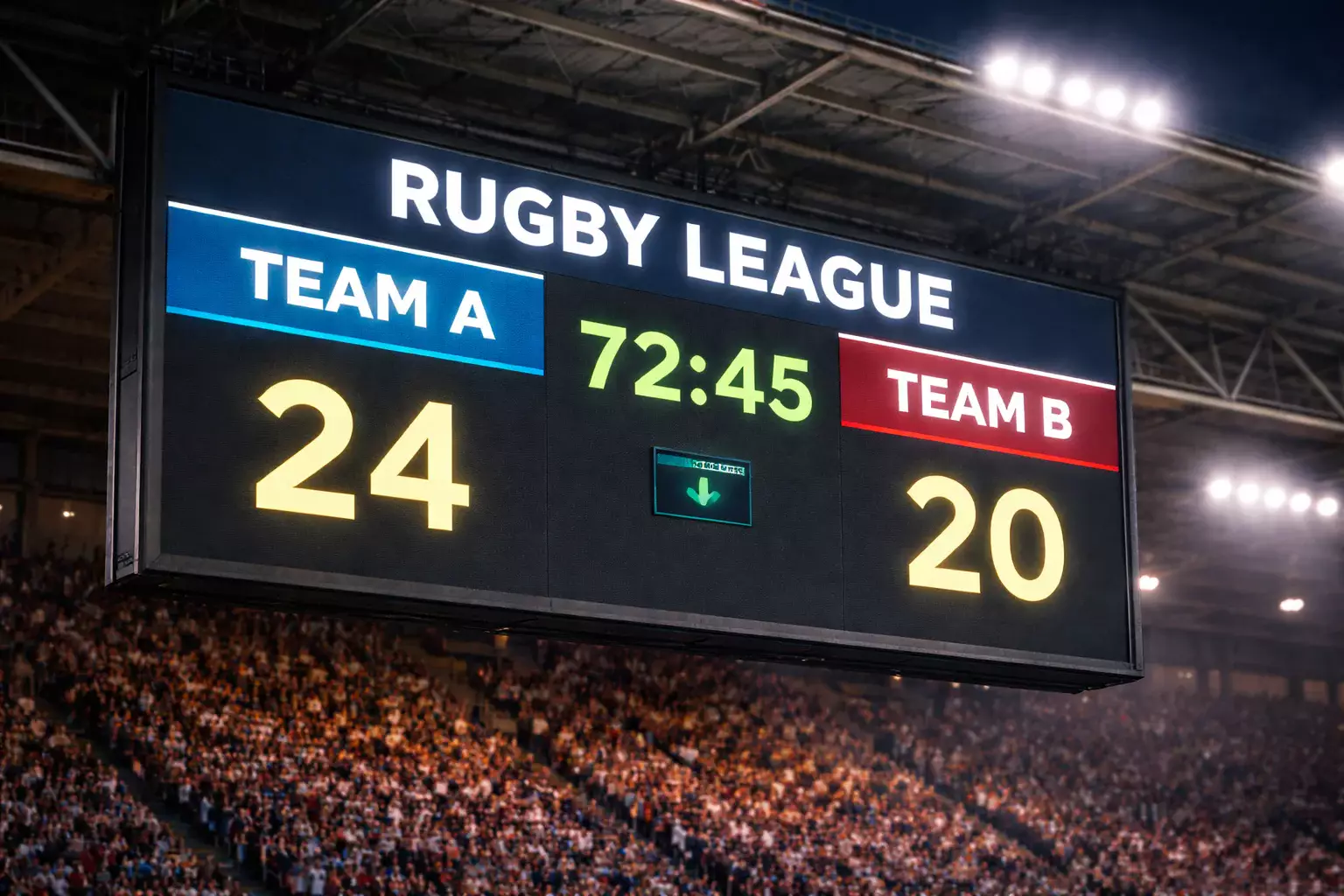
Match Winner (Head-to-Head) Betting
The match winner market represents the simplest and most popular rugby league bet. You pick which team will win, place your wager, and collect if they do. This straightforward premise, however, conceals considerable complexity in execution. Successful head-to-head betting requires accurate assessment of team quality, current form, and situational factors that might not be reflected in the odds.
Rugby league head-to-head markets typically offer two-way betting, meaning draws result in stakes being returned. Draws occur rarely enough in rugby league that bookmakers prefer this approach to offering three-way markets with inflated margins. When draws do happen, usually once or twice per NRL season, both sides receive their money back. Some markets offer "draw no bet" explicitly, while others build this into the standard match winner structure.
Favorites in rugby league often justify their status. Unlike some sports where underdogs win frequently enough to make backing them a viable long-term strategy, rugby league's structured nature tends to reward superior teams consistently. Quality advantages in halves and hooker positions particularly translate to match outcomes, as these players control possession and field position. That said, bookmakers know this too, and favorite prices often offer poor value precisely because the public overestimates the reliability of dominant teams.
The timing of your bet matters for head-to-head markets. Opening lines released several days before a match often differ significantly from closing lines as information emerges and money shapes the market. Team announcements, typically released 24 to 48 hours before kickoff in the NRL, can cause substantial movements. Waiting for confirmed lineups reduces uncertainty but may mean missing favorable odds if the news aligns with public expectations.
Handicap Betting (Line Betting)
Handicap betting, known as line betting in Australian markets, levels the playing field by applying virtual points adjustments to teams. When Penrith plays a struggling opponent, the head-to-head odds might offer minimal value at 1.20 for the Panthers. The handicap market might set Penrith at -14.5 points at 1.90, meaning they must win by 15 or more points for the bet to succeed. Conversely, the underdog at +14.5 wins if they lose by 14 or fewer points, or win outright.
Understanding point spreads requires internalizing rugby league's scoring increments. Converted tries add six points, unconverted tries four, and penalty goals two. Common handicap lines cluster around these increments. A -12.5 line suggests bookmakers expect approximately a two-converted-try margin. Lines at half-point values, like -10.5 or -14.5, eliminate the possibility of a push where bets are refunded due to exact margin matches.
Handicap betting rewards those who understand why teams cover spreads rather than simply who wins. A superior team might dominate possession and field position yet fail to cover a large spread against disciplined defensive opponents. Conversely, some teams consistently produce blowout victories when ahead due to aggressive attacking styles and fitness advantages. Historical spread performance often predicts future covering tendencies better than raw win-loss records.
Line shopping becomes particularly valuable in handicap markets. Different bookmakers often disagree on appropriate spreads by a point or more, and these differences matter. Taking Penrith -13.5 rather than -14.5 might seem trivial, but that single point represents margins where games frequently land. Professional bettors maintain accounts across multiple platforms specifically to capture the best available lines, an approach that compounds into significant edge over time.
Total Points (Over/Under) Betting
Total points markets ask you to predict whether the combined score will exceed or fall below a specified number. An NRL match might be set at 44.5 total points, with odds of approximately 1.90 on both over and under. If the final score is 28-22, the combined 50 points beats the over line. This market removes the need to pick a winner, focusing purely on scoring volume.
Several factors influence total points in predictable ways. Team styles matter most: some teams consistently produce high-scoring affairs through aggressive attacking philosophies, while others grind out low-scoring defensive battles. Head-to-head matchups often deviate from team averages when contrasting styles meet. A free-flowing attacking team facing staunch defense rarely produces the explosive scoring the attacking team's average might suggest.
Weather conditions dramatically affect totals. Wet conditions make handling difficult, increase errors, and favor kicking-based territory games over expansive attack. Wind affects kicking accuracy and can suppress scoring when conversion and penalty goal success rates drop. Venue characteristics also matter, with wider fields generally favoring attacking play. Understanding these factors adds analytical depth for serious bettors.
First Tryscorer Betting
First tryscorer markets combine skill analysis with an unavoidable luck component. You are betting on which player will score the opening try of the match, with odds reflecting both scoring probability and positional factors. Wingers and fullbacks typically receive shorter odds due to their field position and finishing roles, while props and second-rowers are often priced as longshots despite occasionally crossing first.
The luck element cannot be eliminated. Even the most prolific tryscorers rely on teammates creating opportunities, and the first try might come from an unexpected source due to random bounce, defensive error, or set-piece variation. This inherent variance means first tryscorer betting works best as an occasional supplement rather than a primary strategy. The odds offered often fail to adequately compensate for this uncertainty.
That said, patterns exist for those willing to analyze deeply. Some players consistently find themselves in position for early tries due to team structure and play design. Certain teams run particular plays in opening sets that favor specific positions. Analyzing a team's first-try tendencies over multiple games can reveal value when bookmakers set prices based on general positional expectations rather than team-specific patterns.
Anytime tryscorer markets, where you bet on a player scoring at any point during the match, offer reduced variance at lower odds. These markets suit bettors who have identified undervalued scorers without wanting to rely on the randomness of first-try timing. Multi-leg bets combining several anytime tryscorers can build attractive returns, though correlation between teammates scoring means such combinations often offer less value than independent probability calculations suggest.
Winning Margin Betting
Winning margin markets offer higher odds in exchange for greater precision requirements. Rather than simply picking a winner, you must predict the victory margin within specified bands. Typical bands might include 1-12 points, 13-24 points, and 25 or more points, with some bookmakers offering narrower ranges for higher payouts.
This market rewards bettors who understand score clustering. Rugby league margins tend to cluster around certain values due to the scoring system. A margin of exactly 6, 8, 10, or 12 points appears more frequently than margins of 5, 7, 9, or 11, because converted tries add six points while penalty goals add two. Understanding these mathematical tendencies helps identify bands that offer value relative to true probability.
Winning margin betting works particularly well when you have strong conviction about match dynamics but find head-to-head and handicap markets offering insufficient returns. If you believe a dominant team will crush a depleted opponent, the head-to-head odds might be unappealing at 1.15 while the "25+ margin" option pays 3.50. The risk increases, but so does the potential reward when your analysis proves correct.
Combining winning margin selections with live betting creates interesting hedging opportunities. If your pre-match bet on a large margin looks promising at halftime, you might hedge by backing the trailing team at improved live odds, guaranteeing profit regardless of the second-half narrative. This approach requires discipline and quick mathematics but can protect against the comeback variance that makes margin betting inherently risky.
Half-Time/Full-Time Betting
The half-time/full-time market asks you to predict both the halftime leader and the final winner. Nine possible combinations exist: Team A leading at both intervals, Team A leading at halftime with Team B winning overall, draws at various stages, and so on. This market offers substantial odds on complex outcomes, particularly the dramatic scenarios where one team leads at halftime but loses.
Statistical analysis proves particularly valuable here. Some teams consistently start fast, building halftime leads through early-game execution and set-piece proficiency. Others are notorious slow starters who find rhythm as matches progress. Historical first-half versus second-half scoring differentials reveal these tendencies more reliably than subjective impressions.
Fitness and bench quality significantly influence full-time results relative to halftime positions. Teams with superior depth often dominate final quarters as fatigued opponents fade. Tracking bench utilization patterns and late-game scoring trends identifies teams likely to either protect leads or mount comebacks.
Prop Bets and Specials
Proposition bets cover virtually any quantifiable aspect of rugby league matches. Player performance props might include tackle counts, run meters, try assists, or kicking success rates. Team props could involve first scoring method, lead changes, or specific statistical achievements. Novelty markets for major events might cover anthem length, coin toss results, or broadcast mentions.
The value in prop markets often comes from bookmaker limitations. Pricing hundreds of prop bets for every match requires rapid assessment, and errors inevitably occur. Sharp bettors who specialize in specific prop types, whether tackle counts for certain positions or kicking percentages for particular players, can identify systematic mispricings that persist because insufficient money flows through these markets to correct them.
Player props require understanding role assignments within team structures. A halfback's tackle numbers depend largely on team possession patterns and defensive systems. A winger's run meters might swing wildly based on how often teams kick to their edge. Analyzing these role factors rather than relying on player averages produces more accurate projections.
Same-game multis, which combine multiple selections from a single match, have become increasingly popular and profitable for bookmakers. Correlation between selections creates mathematical challenges that bookmakers exploit through inflated margins. A bet combining "Team A to win" with "Team A's fullback to score anytime" involves correlated outcomes that should price differently than independent events, but bookmakers rarely adjust adequately. Understanding correlation helps identify when same-game multis offer value versus when the structure works against you.
Major Rugby League Competitions for Betting

NRL (National Rugby League) Betting
The NRL represents the pinnacle of rugby league and the most liquid betting market for the sport globally. Seventeen teams compete across a 27-round regular season from March through early October, followed by a finals series culminating in the Grand Final. This extended season creates abundant betting opportunities, with matches scheduled throughout the week during key periods.
Team quality in the NRL has stratified into clear tiers that persist across seasons. Historically dominant clubs like the Melbourne Storm, Penrith Panthers, and Sydney Roosters consistently appear in premiership contention, while traditionally struggling franchises often remain in lower positions. This stratification might seem to limit betting opportunities, but it actually creates them: bookmakers must price matches between predictable teams, and the margins for error narrow on both sides.
The finals series introduces unique betting considerations. Eight teams qualify, with the top four earning double chances through the finals structure. This system dramatically affects value calculations: teams finishing 1-4 can lose their first finals match and still progress, while teams finishing 5-8 face elimination from their first finals appearance. Betting on specific finals matchups or series outcomes requires understanding this structure and how teams historically perform under elimination pressure.
NRL Grand Final betting markets open months before the event and shift substantially as the season progresses. Early-season futures can offer tremendous value when identifying teams likely to improve or decline relative to bookmaker expectations. The key is distinguishing genuine contenders from teams that might win enough regular-season games to seem threatening without having the quality to succeed in finals football.
Super League Betting
Super League brings professional rugby league to Europe, with the competition based primarily in England with French participation. The league operates differently from the NRL in ways that affect betting approaches. The northern hemisphere climate means matches played from February through October traverse vastly different conditions, from freezing early-season fixtures to summer evening matches.
Fourteen teams compete in Super League following the 2026 expansion, though format adjustments have occurred periodically. The competition has historically been dominated by a smaller group of clubs, with St Helens, Wigan Warriors, and Warrington Wolves consistently competing for titles. This concentration creates similar dynamics to NRL betting regarding favorites and underdogs, though the smaller pool of teams means individual matchups repeat more frequently.
The Challenge Cup runs alongside Super League, creating fixture congestion that affects team performance. Bettors who track cup runs and their impact on league results gain advantage over those who evaluate each match in isolation. Teams with deep cup ambitions might rest players during seemingly important league fixtures, while early cup exits can refocus attention on league standings.
Super League betting markets typically carry wider margins than NRL equivalents due to lower overall volume. This difference creates both challenges and opportunities. The wider margins mean you need stronger edges to profit, but less sophisticated price-setting in less liquid markets can produce more frequent mispricings for those willing to specialize.
State of Origin Betting
State of Origin transcends normal rugby league competition, pitting New South Wales against Queensland in a three-match series that suspends the NRL season and captivates Australian sporting attention. The intensity exceeds regular club matches, with players representing their state of origin through birth or junior career qualification. This representative pride produces unpredictable contests where form guides from club football provide limited guidance.
The series format creates distinct betting markets. Series winner bets must account for best-of-three dynamics, where dropping the first match does not eliminate a team. Individual match betting follows standard formats but requires adjusting for Origin's unique intensity and the different player combinations compared to club football. The Wally Lewis Medal, awarded to the series' best player, offers a futures market for those confident in predicting individual standout performances.
Historical patterns in State of Origin provide some guidance despite the limited annual sample size. Queensland dominated the series for an extended period before New South Wales reasserted themselves in recent years. Home advantage matters significantly, with the hosting state winning their matches at rates exceeding normal expectations. The decider, when the series reaches 1-1, produces particularly tight contests with outcomes often determined by moments rather than systematic superiority.
Betting on State of Origin requires accepting higher variance than normal rugby league wagering. The exceptional circumstances surrounding these matches mean even careful analysis produces less reliable predictions. Position this market as occasional strategic betting rather than systematic exploitation of edges.
Rugby League World Cup and International Betting
International rugby league remains Australia's domain, with the Kangaroos maintaining remarkable dominance over the sport globally. The Rugby League World Cup, held every four years, represents the premier international tournament, though competitive balance remains limited. Australia and England have historically contested most finals, with New Zealand providing occasional challenges.
Tournament betting markets include outright winner, match results, and various prop bets during the competition. The competitive imbalance creates unusual dynamics where heavy favorites face odds so short they offer minimal value, while underdog markets price in variance that rarely materializes against the sport's elite nations. Finding value often means focusing on markets within predictable outcomes, such as margin ranges or player performances in lopsided contests.
The Four Nations and other international series provide additional betting opportunities outside World Cup years. These competitions feature similar dynamics to the World Cup but with smaller fields and different formats. International windows also affect NRL betting, as key players miss club matches for representative duties, potentially shifting team capabilities significantly.
Emerging rugby league nations occasionally produce genuine upsets worth monitoring. Papua New Guinea has developed competitive representative teams, while Pacific island nations often field squads with NRL-quality players returning to represent their heritage nations. These teams can exceed market expectations in specific circumstances, creating value for bettors who understand the player pools and national team dynamics.
Challenge Cup Betting
The Challenge Cup, rugby league's oldest knockout competition, includes teams from multiple tiers of English rugby league alongside Super League clubs. This format produces classic cup dynamics where lower-division teams occasionally topple professional opponents, creating both excitement and betting opportunity.
Early-round Challenge Cup matches between amateur and professional teams rarely offer legitimate betting value, as bookmakers price the heavy favorites appropriately while underdog odds fail to compensate for the extremely low victory probability. Value emerges more frequently in later rounds when remaining teams possess comparable quality, and cup-specific factors like home advantage, motivation, and recent form influence outcomes.
Integrating Challenge Cup betting with Super League wagering creates a holistic approach to English rugby league. Teams managing both competitions face scheduling challenges and squad depth tests that affect performance across both. Tracking these interactions identifies value in league matches following taxing cup fixtures.
Rugby League Betting Strategies

Form Analysis and Research
Successful rugby league betting starts with rigorous form analysis that extends beyond simple win-loss records. Recent results matter, but context matters more. A team losing narrowly to top opposition might be in better form than one scraping past struggling opponents. Examining performance metrics like possession percentages, completed sets, tackle efficiency, and line breaks reveals underlying quality that scorelines sometimes obscure.
Head-to-head records between specific teams deserve more attention than many bettors provide. Certain matchups produce consistent patterns regardless of overall team quality that season. These patterns often relate to playing style interactions: a team that struggles against fast, athletic opponents might dominate against physical, grinding teams regardless of either's ladder position. Identifying these matchup-specific dynamics creates edges that persist because bookmakers typically weight recent form more heavily than head-to-head history.
Injury reports and team news represent critical information that moves markets significantly. Rugby league's physical nature produces frequent injuries, and losing key players can fundamentally alter team capabilities. Halfbacks and hookers influence matches disproportionately to their numbers, as these positions control possession and orchestrate attack. Losing a starting halfback to injury typically impacts a team more than losing multiple players in less critical positions.
Training reports and unofficial team news can provide early information before official announcements. Beat reporters covering specific clubs often hint at lineup changes or injury concerns days before official confirmation. Following reliable local journalists for your primary betting markets creates an information advantage over bettors who wait for official announcements.
Understanding Line Movement
Odds movement contains information for those who learn to read it. Opening lines represent bookmakers' initial assessment, while closing lines incorporate market information accumulated through betting activity. The direction, speed, and magnitude of movement all convey meaning about where informed money has landed.
Sharp bettors, those with demonstrated profitable track records, typically access markets early and move lines through their action. When a line moves significantly within minutes of opening, professional money has likely identified value. Following these movements blindly is not a winning strategy, as the information is quickly incorporated into new prices, but understanding why sharps might have favored one side helps develop your own analytical framework.
Steam moves, sudden dramatic shifts caused by coordinated sharp action, require careful interpretation. Sometimes steam moves indicate genuine information advantages worth respecting. Other times, sophisticated syndicates attempt to manipulate markets by triggering reactions from bookmakers and reactive bettors. Distinguishing legitimate information-driven moves from manipulation attempts requires experience and skepticism.
Reverse line movement, where the line moves opposite to where public money has landed, often signals sharp action counteracting recreational betting patterns. If 70% of bets land on Team A but the line moves toward Team B, professional money is backing Team B heavily enough to outweigh the public betting volume. These situations frequently identify where value actually lies.
Weather and Conditions Impact
Rugby league's outdoor nature exposes matches to weather conditions that dramatically affect play. Rain reduces handling reliability, increases errors, and compresses scoring. Wind affects kicking games, potentially negating advantages teams might otherwise hold through superior goal-kickers. Extreme heat can accelerate fatigue and benefit teams with superior fitness or bench quality.
Different teams respond to conditions differently based on their playing styles. Teams relying on expansive, ball-moving attack struggle more in wet conditions than teams built around forward dominance and kicking games. Identifying these style-condition interactions helps predict which teams will exceed or fall short of expectations when weather intervenes.
Venue-specific conditions extend beyond weather. Ground hardness affects play speed and injury risk. Altitude matters for international fixtures. Some venues have dimensions or surface characteristics that favor particular playing styles. Building a database of how teams perform at specific venues under various conditions creates compound analytical advantages.
Checking weather forecasts before betting and monitoring conditions as kickoff approaches allows adjusting strategies for expected conditions. Betting markets sometimes fail to fully incorporate weather information until close to kickoff, creating windows where informed bettors can capture value before odds adjust.
Bankroll Management for Rugby League
Sustainable betting requires treating your bankroll as a managed asset rather than disposable entertainment funds. The unit system, where each bet represents a fixed percentage of your total bankroll, prevents emotional betting patterns and survives inevitable losing streaks. Professional bettors typically risk between one and three percent of bankroll per bet, with higher percentages reserved for highest-confidence selections.
Rugby league's scoring variance influences appropriate bankroll strategies. The sport produces more volatile outcomes than some alternatives, meaning even strong analytical approaches will experience extended losing runs. Sizing bets conservatively acknowledges this reality and prevents premature bankroll depletion that would prevent capitalizing on eventual positive variance.
Tracking every bet systematically reveals patterns in your own performance that intuition obscures. Recording the bet type, odds, stake, reasoning, and outcome builds a database for evaluating which markets and approaches actually produce profit versus which feel profitable but drain bankroll over time. This discipline separates serious bettors from recreational punters who remember wins while forgetting losses.
Setting loss limits and win targets provides structure that protects against both devastating sessions and the temptation to chase after successful runs. Predetermined stopping points remove emotional decision-making during periods of heightened psychological response, whether excitement from winning or desperation from losing.
Live Betting Strategies
Live betting on rugby league offers opportunities unavailable in pre-match markets, but requires different skills and discipline. Odds shift rapidly based on match events, and the ability to process information quickly while maintaining analytical rigor determines success. Simply reacting to events without framework leads to impulsive betting that favors the bookmaker.
Momentum identification represents the core live betting skill. Rugby league matches flow through periods where one team dominates field position, possession, and scoring opportunities. Recognizing when momentum has shifted before the scoreline reflects it creates windows for value bets at odds that still reflect the previous game state. This requires watching matches actively rather than following scores passively.
Pre-match analysis creates frameworks for live betting decisions. Before kickoff, identify scenarios where you would want to bet live: if Team A falls behind early, are they likely to respond? If the total reaches 20 points by halftime, does that suggest an over or under for the full match? These predetermined decision points prevent reactive betting while maintaining flexibility to capitalize on emerging situations.
Cash-out features allow locking in profit or limiting losses before matches conclude. Using cash-out strategically requires understanding how bookmakers price this option and when accepting reduced returns protects against likely adverse outcomes. Automated cash-out triggers based on profit thresholds can remove emotion from these decisions, though the bookmaker's margin on cash-out offers means this feature typically favors the house.
Advanced Rugby League Betting Tips

Finding Value in Underdog Markets
True betting value exists when odds exceed true probability, and underdog markets frequently offer this opportunity due to public betting tendencies. Recreational bettors overweight favorites, driven by loss aversion and the psychological comfort of backing expected winners. This systematic bias creates persistent underdog value that sharp bettors exploit.
Identifying which underdogs actually offer value rather than deserved long odds requires distinguishing types of underdogs. Some teams are underdogs because they genuinely lack quality. Others face specific matchup disadvantages that will not recur against different opponents. Still others are underrated due to small sample sizes, recent bad luck, or public perception lagging behind actual improvement.
Early-season value concentrates in underdog markets where preseason expectations have not adjusted to roster changes, coaching shifts, or developmental trajectories. A team that added quality players during the offseason might be priced based on last season's performance for weeks before the market catches up. Similarly, teams that lost key personnel might remain overrated until repeated losses force adjustment.
Injury-driven underdogs sometimes offer exceptional value when markets overreact to missing players. Losing a star fullback matters, but rugby league squads carry depth. If the replacement is competent and the odds move more than the actual capability change warrants, value emerges. Tracking how teams perform without specific players provides data for evaluating these situations.
Statistical Approach to Rugby League Betting
Moving beyond intuition to statistical analysis distinguishes professional approaches from recreational betting. Rugby league generates extensive data that, properly analyzed, reveals patterns invisible to casual observation. Points scored and conceded, completion rates, tackle efficiency, line breaks, errors, and kicking meters all contribute to comprehensive team evaluation.
Defensive metrics often predict results more reliably than offensive statistics. Teams that consistently limit opponents score well in margin predictability, creating handicap betting opportunities. Points conceded per game correlates more strongly with season success than points scored, suggesting defensive reliability trumps offensive explosion for sustained performance.
Adjusted statistics account for opponent quality and provide better predictive power than raw numbers. Scoring forty points against a team allowing forty points per game on average differs from scoring forty against a team allowing twenty-five. Various rating systems, from simple strength-of-schedule adjustments to complex power ratings, attempt to capture these quality differences.
Building personal statistical models requires time investment but creates proprietary edges unavailable to those relying on published analysis. Even relatively simple models using publicly available data can identify market inefficiencies when applied consistently and updated regularly. The edge need not be large: consistent small advantages compound into significant returns over thousands of bets.
Accumulator Betting in Rugby League
Accumulators, combining multiple selections into single bets with compounded odds, offer dramatic potential returns from small stakes. The mathematics work against you, as each additional leg multiplies both potential return and probability of failure, but strategic accumulator construction can produce positive expected value in specific situations.
Correlation represents the key concept for rugby league accumulators. Selections that are not independent should be priced differently than independent events, but bookmakers often fail to adjust adequately. Combining an over on total points with a bet on the high-scoring team to win involves correlated outcomes that the standard odds do not properly reflect. Understanding correlation helps identify accumulators where the true probability exceeds what the combined odds suggest.
Same-game multis pose particular challenges because every selection involves the same match, maximizing correlation effects. Bookmakers have become sophisticated in pricing these combinations, often building in substantial margins that eliminate value despite attractive headline odds. Evaluating same-game multis requires comparing the combined odds against your assessed probability of all legs hitting, accounting for their interconnection.
Small-stakes accumulators can serve entertainment purposes without serious profit expectation, treating potential large returns as essentially lottery tickets. This approach has merit if the stakes remain trivial relative to bankroll. Problems arise when accumulators become primary betting strategy or when chasing accumulator wins leads to unsustainable staking patterns.
Frequently Asked Questions
What are the most popular rugby league betting markets?
Match winner markets dominate rugby league betting volume, offering straightforward selection of the victorious team. The simplicity appeals to casual bettors while still rewarding those who perform thorough analysis of team quality, form, and matchup factors. Handicap markets attract significant attention for matches between mismatched teams, where picking the winner offers insufficient odds but spread betting creates genuine two-way markets with competitive prices.
Total points betting has grown substantially as bettors appreciate the ability to profit without predicting winners. This market rewards understanding of team styles, weather conditions, and scoring patterns rather than directly assessing which team is superior. First tryscorer and anytime tryscorer markets maintain popularity due to their engagement value, connecting betting to specific players rather than abstract team outcomes. While variance in these markets is high, they add excitement to match viewing and occasionally offer genuine analytical value.
How does handicap betting work in rugby league?
Handicap betting applies virtual point adjustments to level wagering opportunities between unevenly matched teams. A team listed at -8.5 points must win by nine or more points to cover the handicap, while their opponent at +8.5 wins the bet by losing by eight or fewer points, or winning outright. This creates competitive betting markets even when one team heavily outclasses the other.
The half-point values eliminate pushes where exact margins would return stakes. Bookmakers set lines based on projected margins adjusted for market sentiment and betting patterns. Understanding why specific lines are set and how they move as information emerges helps identify value opportunities. Lines cluster around rugby league's scoring increments, with margins of 6, 12, and 18 points particularly common due to the six-point value of converted tries.
What factors affect rugby league betting odds?
Team quality forms the foundation of rugby league odds, with historical performance, roster talent, and coaching reputation all contributing to baseline assessments. Recent form adjusts these baselines, as teams on winning streaks or in poor runs see odds shift accordingly. Injury reports significantly affect odds, particularly when key playmakers in halves or hooker positions are unavailable.
Market factors beyond team quality also move odds. Sharp betting action can shift lines substantially when professional bettors identify value. Public money typically backs favorites and overs, creating systematic biases that bookmakers must account for. Weather forecasts influence total points lines and can affect match winner markets when conditions favor specific playing styles. Venue, travel schedules, and fixture congestion round out the factors that sophisticated bettors incorporate into their assessments.
Rugby League Betting Guide Summary and How to Start Betting on Rugby League
Rugby league betting rewards those who approach it with seriousness, patience, and systematic methodology. The sport's unique characteristics, from its scoring system to its competition structures, create betting dynamics distinct from other sports. Understanding these dynamics transforms gambling from entertainment expense into potential profit center for those willing to invest the required effort.
Success requires accepting certain realities. No betting approach guarantees profit; the goal is developing edges that produce positive expected value over large samples. Variance will produce losing streaks regardless of analysis quality, and bankroll management determines whether you survive these periods. The most successful bettors treat rugby league wagering as a serious pursuit demanding continuous learning.
The markets and strategies covered in this guide provide foundation for building your own approach. Start with thorough understanding of basic markets before attempting advanced strategies. Track every bet to evaluate what actually works versus what feels right. Specialize in competitions or market types where you can develop genuine expertise rather than spreading attention too thin.
Remember that sustainable rugby league betting should remain enjoyable. If wagering becomes stressful or compulsive, step back and reassess your relationship with the activity. Responsible gambling underpins everything discussed here. Set limits, respect them, and recognize when betting stops serving your interests. Resources for those experiencing gambling difficulties are available through gambling help services.
