


The National Rugby League stands as the pinnacle of professional rugby league competition, drawing millions of viewers across Australia and attracting a substantial betting market that rivals the sport’s most prestigious events globally. Since its formation in 1998 through the merger of the Australian Rugby League and Super League competitions, the NRL has grown into a betting phenomenon that captures attention from punters on every continent where rugby league has a foothold.
The Australian sports betting landscape has evolved dramatically over the past decade, with NRL betting now representing one of the largest segments of the domestic wagering market. According to industry estimates, Australians wager billions annually on rugby league, with the NRL commanding the lion’s share of that action. The 2026 season promises even greater betting volume, as the competition continues to expand its reach through digital platforms and international broadcast deals that bring every collision, try, and field goal to screens worldwide.
This guide serves as your comprehensive resource for navigating the complexities of NRL betting. Whether you are approaching your first wager on a Thursday night clash or refining your approach after years of following the competition, the information contained here will sharpen your understanding of markets, enhance your analytical framework, and introduce strategies that separate recreational punters from those who approach NRL betting with genuine discipline. The path to profitable rugby league wagering begins with understanding not just the sport itself, but the intricate dynamics that drive odds movements and create value opportunities throughout the grueling 27-round season.
Understanding the NRL Season Structure

Regular Season Format
The NRL regular season spans 27 rounds, with each of the 17 teams playing 24 matches between March and September. This structure creates natural betting rhythms that savvy punters learn to exploit. Teams receive three bye weeks throughout the season, and understanding when clubs face compressed schedules versus when they enjoy extended recovery becomes essential intelligence for anyone placing wagers.
The competition operates on a points-based ladder system where victories earn two points and draws yield one point apiece. This straightforward structure belies the complexity beneath the surface. Teams separated by just two points might occupy vastly different positions relative to the top eight playoff cutoff, creating motivation disparities that directly impact betting outcomes. A team sitting comfortably in third position approaching Round 25 carries different intensity into matches compared to a club fighting desperately to crack the eight.
Fixture scheduling introduces another critical variable. The NRL staggers matches across Thursday, Friday, Saturday, and Sunday, with occasional Monday night features during public holiday rounds. Thursday night matchups typically feature the previous week’s top-of-the-table clash or emerging rivalry, while Sunday afternoon games historically produce different scoring patterns compared to Friday night under lights. These scheduling nuances translate directly into betting considerations, particularly when examining total points markets and player performance propositions.
Finals Series Explained
September transforms the NRL landscape entirely as the top eight teams enter a four-week finals series that culminates in the Grand Final at Sydney’s Accor Stadium. The finals operate under a modified double-elimination format where finishing position carries enormous significance. Teams placing first through fourth receive a crucial advantage: losing in Week 1 merely sends them to a second-chance knockout match, while teams finishing fifth through eighth face immediate elimination from their opening finals fixture.
This structure creates compelling betting scenarios. The qualifying finals featuring teams seeded 1v4 and 2v3 operate under different psychological conditions than the elimination finals between seeds 5v8 and 6v7. Statistical analysis reveals that top-four teams playing at home in qualifying finals cover the spread at notably higher rates than regular season matches, largely because the safety net of another chance reduces conservative play-calling late in games.
The preliminary finals represent perhaps the most attractive betting round of the entire season. These matches feature teams that have already proven their mettle through at least one finals victory, yet desperation reaches its peak with Grand Final qualification on the line. Line movements during preliminary final week tend to be more volatile than any other point in the season, creating opportunities for those who establish positions early or recognize when public money has pushed prices beyond reasonable value.
Key Dates for Bettors
The NRL calendar contains several dates that demand attention from serious bettors. Round 1, typically falling in the second week of March, marks the beginning of outright and futures betting in earnest. Pre-season trials held throughout February provide glimpses of team compositions and tactical approaches, though betting markets for these matches remain limited and illiquid.
State of Origin period disrupts the regular season through May, June and July, with three representative matches pulling the game’s elite players from their club duties. Rounds surrounding Origin fixtures historically produce unusual results as depleted rosters take the field. Identifying which teams suffer greatest Origin representation and which benefit from relatively unaffected squads creates edges that compound across the three-game series.
The trading deadline, falling in late June, represents another pivotal moment. Player movements between clubs can dramatically alter team dynamics for the season’s second half. Similarly, the September 1 cutoff for finals squad registration finalizes rosters for the business end of the season, with any subsequent injuries creating no-replacement scenarios that bettors must factor into their analysis.
NRL Betting Markets

Match Markets
Head-to-head betting remains the most accessible entry point for NRL wagering. This market simply requires selecting which team will win the match, with odds reflecting implied probability based on bookmaker assessments and market demand. The NRL does not permit drawn matches during regular season play, with extra time and golden point rules ensuring a decisive outcome, though some bookmakers offer “draw no bet” variants for specific promotional purposes.
Line betting, known internationally as handicap or spread betting, dominates NRL wagering volume. Bookmakers establish a points margin, and bettors must determine whether the favored team will exceed that margin or the underdog will keep the match closer than predicted. Standard NRL lines range from 1.5 points in genuinely competitive matchups to 20 or more points when premiership contenders face struggling clubs. The half-point eliminates push possibilities, guaranteeing either victory or defeat against the spread.
Total points markets ask bettors to predict whether combined scoring will exceed or fall below a designated number. The NRL averages approximately 42-46 total points per match depending on seasonal conditions and rule adjustments, though individual game lines vary substantially based on team offensive outputs, defensive rankings, and venue characteristics. Weather forecasts carry significant weight in totals betting, with projected rainfall often triggering line movements of 4-6 points in either direction.
Player Markets
First tryscorer betting captures enormous attention despite representing one of the most volatile markets in rugby league wagering. This market requires selecting which player will score the opening try, with odds reflecting historical scoring rates, positional tendencies, and team attacking structures. Wingers and fullbacks typically carry shortest prices given their finishing responsibilities, while forwards who score regularly from close-range drives can offer value at longer odds.
Anytime tryscorer markets remove the volatility of first scoring by paying out if the selected player crosses the line at any point during the match. This market offers more realistic probability assessment for consistent scorers, though juice remains substantial as bookmakers protect against the relatively high strike rates of prolific try-scoring backs.
Player performance propositions have expanded dramatically in recent seasons. Markets now cover individual statistics including tackle counts, run meters, tackle breaks, and kicking meters. These granular betting options reward deep research into player roles within team structures and matchup-specific advantages. Understanding that a particular lock forward averages 42 tackles per game but faces a ball-carrying opponent who generates 20 tackle-break opportunities creates actionable intelligence for those willing to invest analytical effort.
Futures and Outright Markets
Premiership winner betting opens immediately following each Grand Final and continues accepting action throughout the subsequent season. Early-season odds reflect bookmaker projections incorporating recruitment, departures, coaching changes, and historical performance. These markets offer the longest odds but require capital commitment across many months before resolution.
Minor premiership betting, predicting which team will finish atop the ladder after 27 rounds regardless of finals outcomes, attracts bettors who value regular season consistency over knockout tournament variance. This market often provides value on teams with deep rosters capable of handling Origin absences and injury setbacks without significant ladder position deterioration.
Dally M Medal betting asks punters to predict the season’s best player as determined by voting conducted throughout each match. This market rewards identification of potential breakout seasons and recognition of players on successful teams likely to accumulate votes through televised matches where voting carries greater weight. Historical patterns show halfbacks, five-eighths, and fullbacks dominating the medal, with forwards rarely polling enough votes across the season regardless of genuine performance quality.
NRL Grand Final Betting
The season’s final match attracts betting volume that dwarfs any regular season fixture, with markets proliferating to accommodate demand. Beyond standard match, line, and total offerings, Grand Final betting includes Clive Churchill Medal wagering, which recognizes the finest individual performer of the match. This market provides opportunities for those who recognize that game-breaking backs and dominant ball-players win the medal far more frequently than defensive stalwarts regardless of actual game impact.
First try scoring team markets gain particular significance in the Grand Final context, where early momentum often proves decisive. Historical analysis reveals that teams scoring first win the Grand Final at rates exceeding 70%, making this market particularly attractive when strong favorites face opponents likely to adopt conservative opening strategies.
Margin betting segments the victory spread into bands, typically 1-12 points, 13+ points, or exact margin predictions at longer odds. Grand Finals historically produce tighter margins than regular season meetings between the same opponents, as motivation equalizes and tactical preparation intensifies. This trend suggests systematic value exists in backing closer margins than regular season head-to-head results might indicate.
Top NRL Teams Analysis for Betting
Premiership Contenders
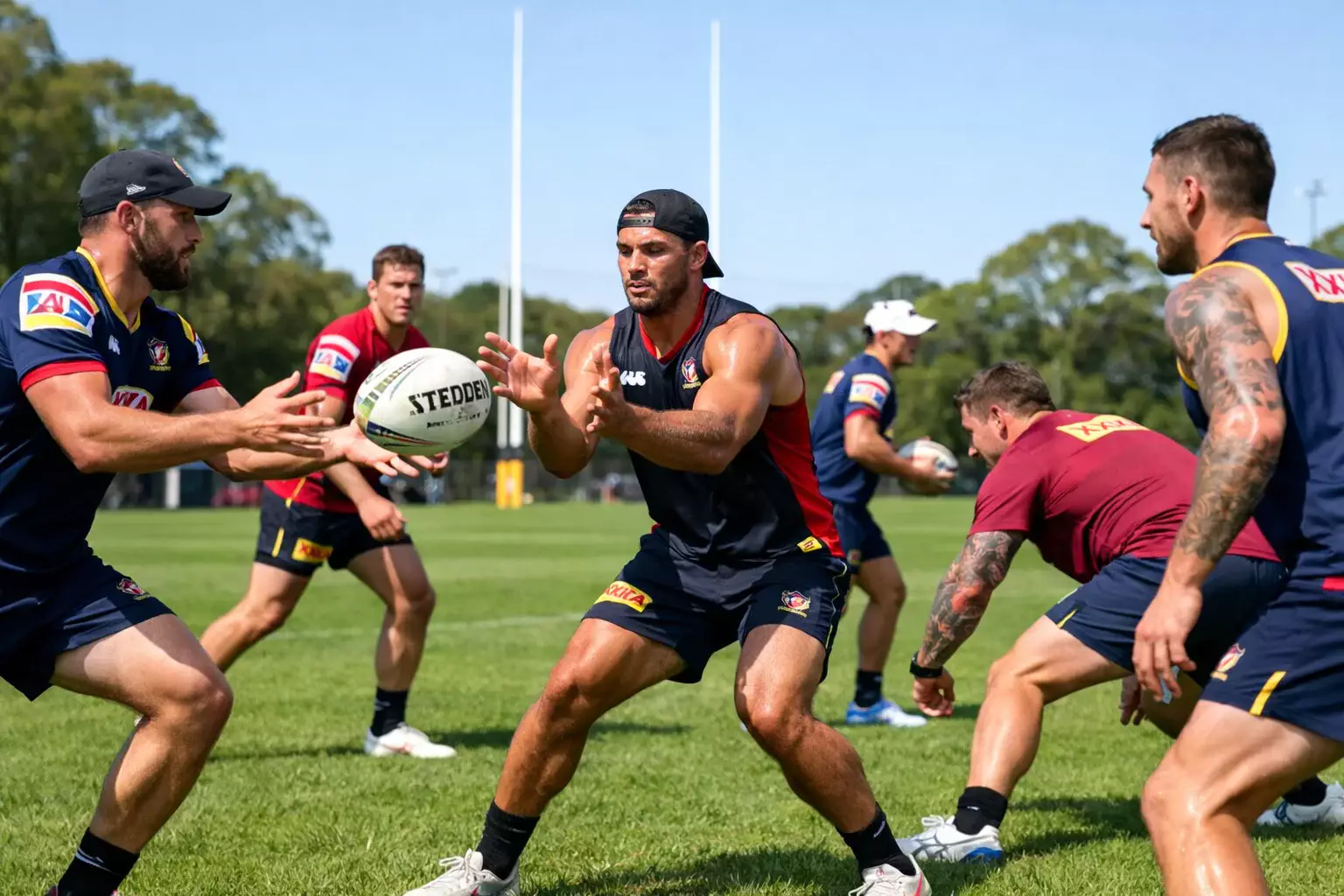
The elite tier of NRL competition typically contains four to six genuine premiership threats in any given season, with the 2026 campaign shaping up no differently. Penrith Panthers remain the benchmark after their extraordinary dynasty run, with their system now ingrained deeply enough to survive individual player departures. Betting against the Panthers in any match requires genuine justification beyond mere contrarianism, though their dominance has compressed odds to points where value becomes elusive.
Melbourne Storm continue operating as the model franchise, their sustained excellence spanning decades rather than seasons. The Storm’s betting profile differs from Penrith’s, as their physical approach generates more variance in actual scoring while their defensive structures keep matches tighter than their offensive output might suggest. Total points markets for Storm fixtures consistently settle below league average, rewarding under bettors who trust the club’s systematic approach.
Sydney Roosters represent the traditional powerhouse whose salary cap management and recruitment acumen maintains perpetual relevance. The Roosters’ Eastern Suburbs heartland provides financial advantages most competitors cannot match, translating into roster depth that limits deviation between best-case and worst-case weekly lineups. This roster stability makes the Roosters more predictable for betting purposes, with fewer variance events disrupting expected outcomes.
Mid-Table Value Teams
The teams occupying positions six through twelve on the ladder provide the most fertile ground for profitable betting. These clubs possess sufficient quality to defeat anyone on favorable days while lacking consistency that would compress their odds toward favorite territory. Identifying which mid-table teams are ascending versus which are trending downward creates the single greatest source of betting value across the NRL season.
Clubs emerging from coaching changes often require half a season before new systems take hold, creating periods where their betting odds lag behind actual improvement. Conversely, teams losing key personnel to retirement, injury, or departure frequently receive too much residual respect from odds compilers drawing on historical performance no longer relevant to current capabilities.
The specific teams occupying this tier shift annually, but the principle remains constant. During the opening twelve rounds, track which mid-table clubs exceed expected performance and which disappoint. By Round 15, patterns stabilize sufficiently to inform second-half wagering with genuine conviction, allowing punters to exploit bookmaker lag in adjusting assessments.
Teams to Avoid
Every NRL season features two or three clubs that simply cannot be trusted with betting capital regardless of odds offered. These teams exhibit dysfunctional characteristics extending beyond mere roster weakness, with coaching instability, player unrest, or administrative chaos undermining any attempt at consistent performance prediction.
Identifying these clubs requires attention to off-field indicators that never appear in statistical databases. Media reports of player conflicts, coaching rumours, financial difficulties, or front office turmoil frequently precede extended on-field struggles. The betting implication is straightforward: avoid these teams entirely rather than attempting to find value at either end of their matchups. Opponents of dysfunctional clubs often attract excess public action, yet the dysfunctional team’s variance makes reliable prediction impossible.
One critical exception exists. When genuinely troubled clubs face each other, betting opportunities emerge precisely because both teams become difficult for casual punters to assess. These matchups often feature softer lines and reduced betting limits, with bookmakers acknowledging the increased uncertainty. Bettors willing to conduct detailed analysis of such low-profile fixtures sometimes find value that disappears from marquee matchups where betting volume brings odds toward true probability.
NRL Betting Strategies

Home Ground Advantage Analysis
Home advantage in the NRL warrants systematic study beyond casual acknowledgment. The competition’s geographic spread creates situations where some home advantages exceed others substantially. Teams playing at their genuine home venue, where members comprise the majority of attendance, receive measurably more benefit than clubs sharing stadiums or playing at neutral suburban grounds.
Travel asymmetry amplifies home advantage calculations. When Queensland-based teams host clubs from Melbourne or New Zealand, the visiting side endures flights, time zone adjustments, and climate differences that compound beyond simple crowd disadvantage. Statistical analysis confirms that interstate visitors cover the spread at materially lower rates than their overall against-the-spread records would suggest, particularly when short turnarounds limit recovery time.
Certain venues produce idiosyncratic outcomes worthy of specific attention. Compact rectangular stadiums generate different atmospheres than cavernous shared facilities. Coastal venues introduce wind variables that disrupt kicking games. Synthetic surfaces, where they exist, favor teams comfortable with the faster pace and true bounces these pitches produce. Building venue-specific models that adjust base expectations delivers edges available to anyone willing to compile the necessary historical data.
Travel Fatigue Factor
The NRL’s national footprint creates travel demands unlike any domestic rugby league competition globally. New Zealand Warriors face the most extreme circumstances, crossing the Tasman for most away fixtures with cumulative fatigue building throughout the season. Their betting odds should reflect this burden, yet public perception sometimes overcompensates in either direction depending on their recent form trajectory.
Short turnaround travel proves particularly impactful. Teams playing Thursday night at home then traveling interstate for Sunday afternoon kickoff face compressed preparation windows that typically favor opponents. Six-day turnarounds following interstate travel similarly disadvantage the traveling side, with recovery and training limitations affecting performance against rested opponents.
Bye week scheduling interacts with travel fatigue in complex ways. Teams receiving byes following extended travel stretches often bounce back strongly, while clubs whose byes interrupt momentum built during favorable home stretches sometimes struggle to recapture rhythm. Mapping these sequences across the full fixture allows identification of spots where fatigue accumulation peaks and recovery opportunity creates fresh legs.
Injury Impact Assessment
Rugby league’s collision intensity ensures injuries remain constant betting considerations. The official NRL injury list, published mid-week before each round, provides baseline information that markets immediately incorporate. Value exists not in reacting to published lists but in anticipating how specific absences affect team function beyond simple player quality differentials.
Positional context matters enormously. Losing a starting halfback devastates attacking structure more than losing a middle forward despite similar overall player quality. Similarly, backline injuries to centers and wingers create defensive vulnerabilities against opponents capable of exploiting edge mismatches, while those same absences matter less against teams lacking the attacking creativity to target them.
Cumulative injury effects compound across seasons. Teams absorbing three or four simultaneous absences often struggle despite individually adequate replacements, as combinations and timing disruptions accumulate. Conversely, clubs integrating one significant return may receive performance boosts exceeding that single player’s direct contribution, as their presence unlocks capabilities from teammates previously constrained.
Weather Conditions in Australia
Australian weather patterns create distinct betting considerations across the NRL’s geographic range. The Queensland summer humidity lingers into early season rounds, favoring teams conditioned for oppressive conditions against southern opponents uncomfortable in tropical heaviness. Conversely, July and August matches in Melbourne and Sydney occasionally produce genuinely cold, wet conditions that transform scoring environments.
Rain impacts NRL betting more dramatically than in most sports due to the ball-handling demands involved. Wet conditions increase handling errors, reduce kicking accuracy, and generally suppress scoring while increasing the importance of forward dominance and field position. Total points markets adjust when forecasts predict rain, but the magnitude of adjustment frequently underestimates the actual scoring depression that sustained wet weather produces.
Wind receives less attention than rain despite materially affecting outcomes, particularly for teams whose playing styles rely heavily on kicking games. Coastal venues in Newcastle, Brisbane, and Sydney regularly experience crosswinds that render sideline conversion attempts essentially coin flips regardless of kicker quality. Matches at these venues in predictably windy conditions favor teams comfortable playing direct, low-kicking rugby through the middle of the field.
NRL Betting Tips from Experts

Weekly Betting Approach
Successful NRL bettors establish routines that systematically gather relevant information before each betting round. Tuesday team list announcements provide initial lineup information, with Wednesday updates confirming final 17-player squads. The window between team announcement and betting market adjustment creates brief opportunities for those prepared to act quickly on unexpected selection news.
Handicap betting deserves more attention than match winner markets for most bettors. The NRL produces enough upsets that backing favorites at short odds erodes bankrolls through accumulated losses on seemingly safe bets. Line betting shifts focus toward margin assessment rather than outright winner prediction, a fundamentally different skill that rewards detailed analysis over gut feel.
Discipline around stake sizing prevents the weekly rhythm from becoming problematic. Treating each round’s betting allocation as independent from previous results, resisting the urge to chase losses through increased stakes, and maintaining consistent unit sizing regardless of confidence levels sounds elementary yet eludes most recreational bettors. The NRL season’s length means variance must be accepted across weeks, with profitability measured over months rather than individual rounds.
Finals Betting Strategy
The transition from regular season to finals demands adjusted analytical frameworks. Teams that dominated during the 27-round regular season sometimes struggle in knockout environments where opponent preparation intensifies and tactical adjustments gain importance. Identifying which teams possess the coaching flexibility and player versatility to adapt their approach when facing elimination pressure separates effective finals betting from merely continuing regular season habits.
Elimination final matchups between seeds five through eight often provide the best value of the finals period. These games feature teams whose odds remain longer than their genuine probability would warrant, as public perception undervalues clubs that scraped into the eight. Meanwhile, qualifying finals featuring top-four sides sometimes see favorite prices compressed beyond value, with the safety of double-chance status already priced into lines.
Grand Final betting particularly rewards patience. Markets open immediately following preliminary finals, with initial prices reflecting the emotional state of bettors rather than sober analysis. Waiting for the betting frenzy to subside, typically by Tuesday of Grand Final week, allows odds to settle closer to true probability before placing final positions. See also NRL same game multi strategy.
Value Betting in NRL
Value betting in the NRL context requires understanding both the theoretical concept and its practical application. A value bet exists when the true probability of an outcome exceeds the implied probability reflected in offered odds. This sounds simple but demands accurate probability assessment, which remains the fundamental challenge for any sports bettor.
Developing probability estimates requires building models that process available information systematically. This need not involve complex mathematics. Even simple power ratings that assign relative strength values to each team, adjusted for venue and circumstances, outperform intuitive assessment over large sample sizes. The discipline of creating explicit probability estimates before examining offered odds prevents anchoring bias from distorting judgment.
Long-term profitability demands accepting that individual bets will lose frequently even when value exists. A fifty percent strike rate on bets with implied probability of forty-five percent generates profit over hundreds of wagers despite losing roughly half the time. Emotional resilience through losing streaks, and resistance to overconfidence during winning runs, defines sustainable betting practice more than any single analytical insight.
NRL Betting Guide Summary and How to Bet on the National Rugby League
The NRL provides among the richest betting environments in world sport, combining accessible markets with sufficient complexity to reward dedicated study. The strategies and frameworks outlined throughout this guide establish foundations for approaching NRL wagering with the discipline and analytical rigor that profitable betting demands.
Understanding the competition’s structure, from regular season rhythms through finals intensity, creates context essential for interpreting statistical patterns and market movements. Familiarity with available markets across match, player, and futures categories expands the toolkit available when seeking value. Recognition that team quality varies across the ladder, and that identifying ascending or declining form proves more valuable than respecting historical reputation, sharpens weekly selections.
The betting strategies examined here, encompassing home advantage, travel impact, injury assessment, and weather considerations, represent starting points rather than complete systems. Each bettor must develop personalized approaches that leverage individual strengths in information gathering and analysis. What remains universal is the requirement for discipline: consistent staking, emotional control through variance, and long-term perspective that accepts short-term losses as the price of eventual profit.
Responsible gambling practices deserve final emphasis. Betting should enhance enjoyment of NRL competition rather than create financial stress or emotional difficulty. Establishing firm limits, never wagering funds needed for essential expenses, and recognizing when betting stops being entertainment all matter more than any analytical edge. The NRL season stretches across seven months, providing ample opportunity to engage thoughtfully rather than recklessly with one of Australia’s most compelling sporting competitions. Complete NRL guide on rugby league betting.
