

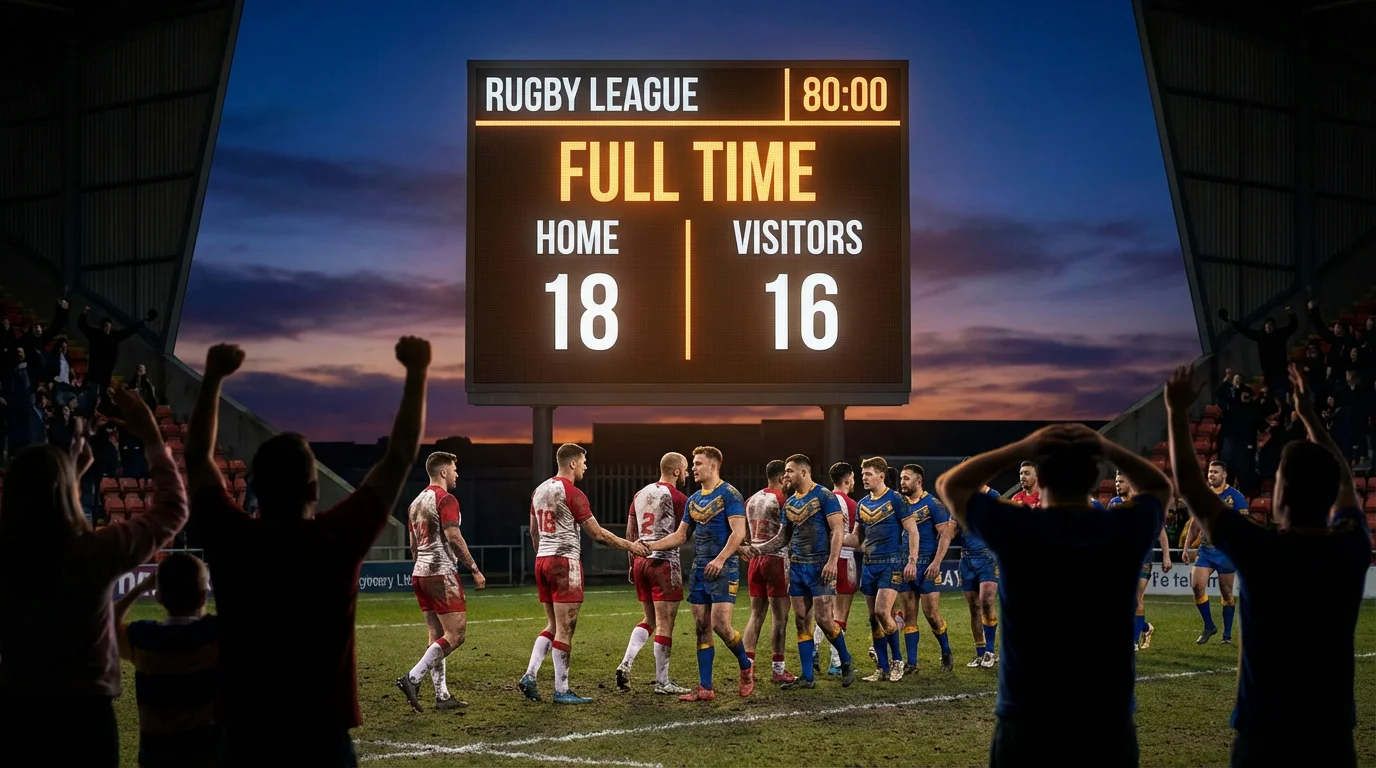

Winning margin betting asks a harder question than the standard handicap: not just which team wins and by roughly how much, but the exact band into which the final margin falls. That added precision makes margin markets more difficult to beat — but it also makes them more rewarding when you get it right, because bookmakers attach higher odds to compensate for the reduced probability of hitting the exact range.
For bettors who understand rugby league’s scoring patterns deeply enough, margin betting is one of the few exotic markets that can offer genuine long-term value rather than pure entertainment.
How Margin Markets Work
Most bookmakers offer winning margin bets in bands: 1-6 points, 7-12 points, 13-18 points, 19-24 points, and 25 or more. Some offer narrower bands — 1-4, 5-8, and so on — while others let you bet on the exact winning margin. The wider the band, the shorter the odds; the narrower or more precise, the longer the price.
The structure of these bands is not arbitrary. It reflects rugby league’s scoring increments. A converted try produces six points, so a one-try margin falls within the 1-6 band. Two converted tries equal 12 points, sitting in the 7-12 band. Three converted tries produce 18, landing in the 13-18 range. The bands essentially correspond to the number of converted tries separating the two teams, plus or minus unconverted tries, penalty goals, and field goals that create variation within each band.
Understanding this scoring logic is the first step toward margin betting. A match between two evenly matched teams is most likely to produce a margin in the 1-12 range, with 1-6 being the single most common outcome band. A match between a strong favourite and a weaker opponent is more likely to produce margins of 13 or more, but the specific band depends on the quality gap and the game flow. Bookmakers set the odds for each band based on their models, and your job is to identify where their model and your assessment disagree. See also spread betting.
Why Margin Betting Can Offer Better Value Than Handicaps
The standard handicap market is the most heavily traded market in rugby league, which means it is also the most efficient. Hundreds of thousands of dollars flow through NRL handicap lines each week, and the closing line is a remarkably accurate reflection of true probabilities. Beating the handicap market consistently is difficult because the price is sharpened by the volume and quality of money that passes through it.
Margin markets, by contrast, attract less volume. Fewer bettors engage with them, and the money that does come in is more recreational — punters taking a shot on their team to win by 13-18 because they like the odds, rather than doing any serious analysis. This lower volume and lower average bettor quality means margin prices are less efficient than handicap prices. The bookmaker still applies an overround, but the individual band prices are not as finely calibrated because the market does not force them to be.
This creates a structural opportunity. If you can estimate the probability distribution of margins — not just the expected margin, but the range of likely margins — you can compare your distribution against the bookmaker’s implied probabilities for each band and identify which bands are overpriced. This is more analytically demanding than simple handicap betting, but the reward is access to a less efficient market where your edge, if it exists, survives for longer before being competed away.
The other advantage of margin betting over handicaps is that the odds are significantly higher. A handicap bet on a six-point favourite might pay 1.90. The same team winning by 1-6 points might pay 3.50 or higher. If your analysis supports the specific margin range, the return per unit of correct analysis is substantially better in the margin market. The trade-off is that you will win less frequently, but if the odds adequately compensate for the lower hit rate, the expected value can be positive.
Analysing Scoring Patterns for Margin Predictions
To bet margins effectively, you need to understand how specific matchups produce specific scoring patterns. This goes beyond knowing which team will win and by roughly how much — it requires assessing the likely flow of the game and the factors that push the margin toward one band or another.
Start with the defensive profiles of both teams. Two strong defensive sides — teams that concede fewer than 18 points per game — are likely to produce a tight margin regardless of which wins. The 1-6 and 7-12 bands become more probable, and the 25-plus band becomes unlikely. If one side has a porous defence and the other has a potent attack, the margin distribution shifts toward larger bands. This is basic, but many recreational margin bettors ignore it and simply back their expected winner in whichever band feels right.
Kicking accuracy is another factor that matters disproportionately in margin betting. A team with a reliable goalkicker converts tries into six-point events rather than four-point events, which pushes margins toward the top of each band rather than the bottom. Over a full match, the difference between an 80% goalkicker and a 65% goalkicker can be four to six points — enough to shift the margin from one band to the next. When assessing margin probabilities, check both teams’ conversion rates and factor in any changes to the designated kicker due to injury or selection.
The game situation also matters. Close games tend to stay close because the trailing team remains in attacking mode and the leading team does not shift into full defensive mode. Blowouts, by contrast, tend to accelerate once the margin reaches 18 or more, because the trailing team’s morale drops and their discipline deteriorates. This non-linear scoring dynamic means that the 25-plus margin band occurs more frequently than a simple linear extrapolation of the expected margin would suggest, which can make it an underpriced option when one side is a heavy favourite.
Weather, Venue, and Situational Adjustments
Margin betting is particularly sensitive to environmental and situational factors because these variables affect not just whether a team wins, but by how much. A team that would beat an opponent by 18 points on a dry track at their home ground might win by only 8 on a wet night away from home. That difference — two full margin bands — is the kind of adjustment that separates profitable margin bettors from those playing expensive lottery tickets.
Rain compresses margins by reducing scoring, which concentrates outcomes in the lower bands. If a match is expected to be played in heavy rain, the 1-6 and 7-12 bands become more probable, and the 19-plus bands become less likely. This is a well-known effect in totals betting, but its application to margin betting is underappreciated. The bookmaker adjusts the total points line for rain, but margin band prices do not always move proportionally, which creates opportunities for bettors who connect the weather forecast to the margin distribution rather than just the over/under.
Travel and fatigue influence margins through second-half performance. A team that travels across the country for a Friday night fixture may compete evenly for 60 minutes before fatigue opens the margin in the final quarter. This makes the 13-18 and 19-24 bands more probable relative to a scenario where both teams are fresh, because the late-game scoring disproportionately benefits the home side. If your analysis of a specific match suggests a close first half followed by a home team pull-away, the appropriate margin band shifts upward compared to a straight averaging of the expected margin.
Referee tendencies are the most overlooked situational factor in margin betting. Some referees penalise more frequently than others, and the flow-on effect for margins is real. A high-penalty referee gives the dominant team more attacking opportunities — through repeat sets from penalties in good field position — which tends to inflate the margin. If you have data on the appointed referee’s average penalty count and can compare it to the league average, you have a variable that most margin bettors do not consider.
The Margin Is a Story the Scoreline Tells After the Final Whistle
The final margin of a rugby league match is the compressed narrative of 80 minutes of play — all the momentum shifts, individual errors, tactical battles, and random events distilled into a single number. Betting on that number requires a different kind of thinking than most markets demand.
Handicap betting asks: will this team win by more or less than a specific line? That is a binary question. Margin betting asks: which range of outcomes is most likely, given everything I know about these two teams and the conditions? That is a distribution question, and answering it well requires you to think in probabilities rather than predictions.
The bettors who profit from margin markets are not those who guess the scoreline correctly most often. They are those who identify, consistently and over large samples, which margin bands are priced above or below their true probability. A band priced at 5.00 — implying a 20% chance — that actually occurs 25% of the time is profitable to bet on, even though it loses three out of four times. The arithmetic is unambiguous; the discipline to keep betting a selection that loses frequently is the harder part.
If margin betting appeals to you, start by tracking actual margins against your predictions for a full NRL or Super League round without placing any money. Do this for a month. See whether your predicted bands align with reality more often than the implied probabilities suggest. If they do, you have the beginning of an edge. If they do not, you have saved yourself the cost of learning that lesson with real money. Winning margin betting on rugby league betting.
