


State of Origin represents rugby league’s most intense spectacle, a three-game series that transforms the sport’s finest players into gladiators representing their birth states in combat that transcends ordinary competition. The annual battle between New South Wales and Queensland generates atmospheres unmatched anywhere in rugby league, with passion levels that make regular NRL fixtures feel almost genteel by comparison. For bettors, Origin presents unique challenges and opportunities that demand approaches distinct from standard club football wagering.
The series carries cultural weight that defies easy explanation to outsiders. Grown men weep openly when their state prevails. Players perform beyond apparent physical limitations when wearing the sky blue of New South Wales or the maroon of Queensland. Careers are defined by Origin moments rather than club achievements. This emotional intensity permeates betting markets, creating dynamics where public sentiment, historical allegiances, and irrational exuberance distort odds in ways that careful analysis can exploit.
This guide examines every aspect of State of Origin betting, from understanding the series format through identifying value in specific markets and developing strategies that account for Origin’s unique characteristics. The 2026 series promises another chapter in rugby league’s greatest rivalry, and bettors who approach these matches with appropriate preparation will find opportunities that casual wagering overlooks entirely.
Understanding State of Origin
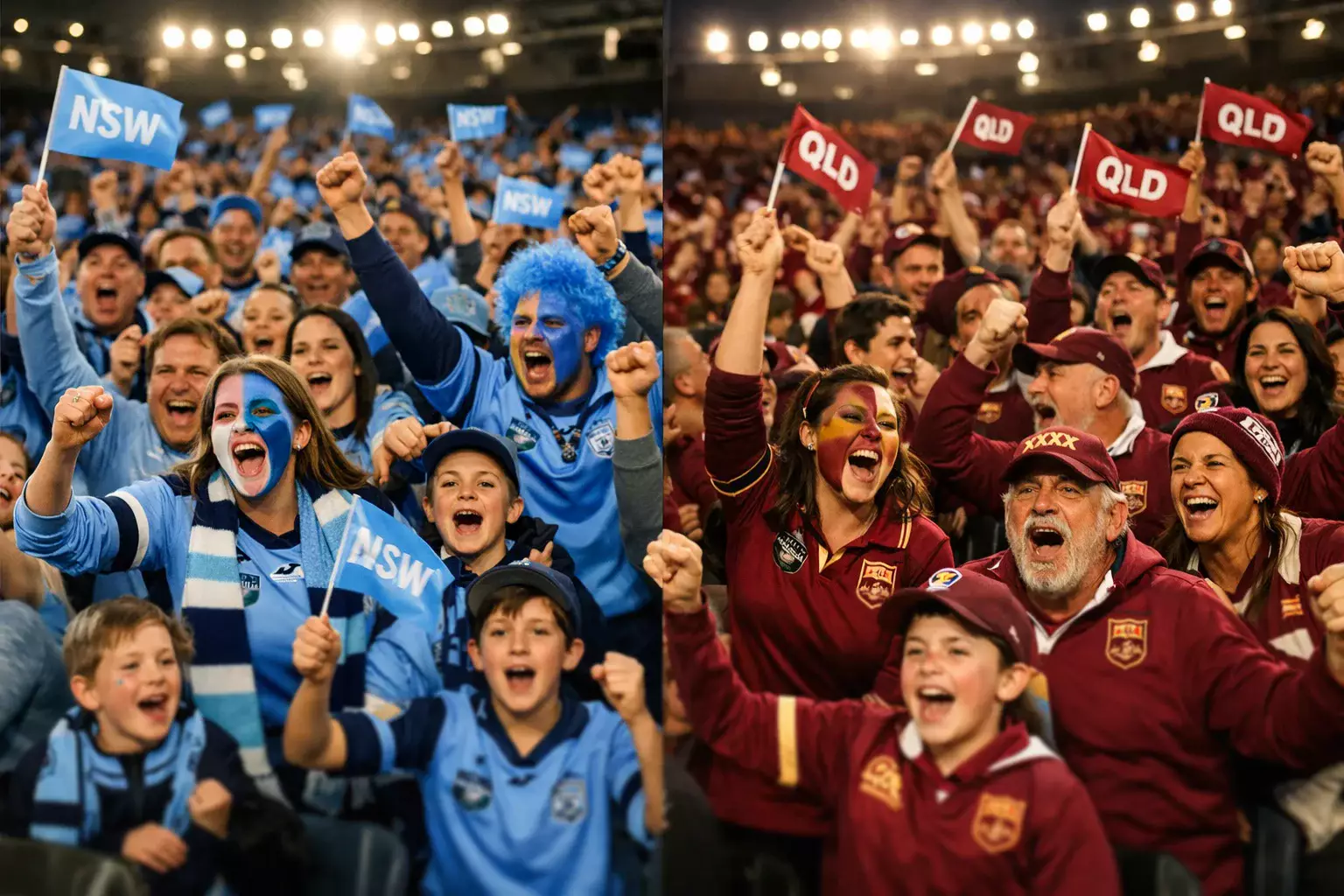
Series Format and History
State of Origin operates as a best-of-three series contested annually between New South Wales Blues and Queensland Maroons. The team winning two games claims the series, with the shield changing hands only when the opposing state achieves this majority. Games are played across May, June and July, interrupting the NRL regular season and pulling the competition’s elite players from club duties for representative combat.
The series emerged in 1980 as a response to decades of New South Wales dominance when players represented whichever state they played club football in rather than their state of birth. Queensland, whose best players inevitably migrated south for professional opportunities, demanded origin-based selection that would allow them to reclaim their native sons. The resulting competition immediately produced closer contests, with Queensland winning the inaugural series and establishing what would become extended periods of interstate dominance.
Queensland’s extraordinary run from 2006 through 2013, winning eight consecutive series, reshaped perceptions of the rivalry and influenced betting markets for years afterward. Even after that dynasty ended, residual respect for Queensland’s Origin pedigree sometimes inflated their odds beyond current squad quality. Recognizing when historical reputation creates mispricing against current form remains essential for Origin betting success.
The Rivalry Explained
The New South Wales versus Queensland rivalry draws on genuine regional distinctions that extend far beyond football. Cultural differences between Sydney’s cosmopolitan density and Queensland’s sprawling regional identity create tribal affiliations that players carry from childhood. Selection for Origin represents homecoming rather than mere representative honor, with players returning to their ancestral football communities regardless of where professional careers took them.
This rivalry’s intensity produces performances that statistical models struggle to predict. Players who appear ordinary in club contexts transform when wearing Origin colors, while consistent NRL performers sometimes shrink from the occasion’s magnitude. The emotional variables overwhelm technical analysis in ways that create both risk and opportunity for bettors willing to incorporate psychological assessment alongside statistical evaluation.
Crowd atmospheres in Origin matches exceed anything experienced in regular competition. Suncorp Stadium in Brisbane becomes a fortress when Queensland hosts, with noise levels that genuinely affect opposition communication and concentration. Sydney venues generate comparable intensity when New South Wales takes home advantage. These venue effects warrant greater weighting than standard home advantage calculations applied to club football.
Why Origin Betting is Unique
Origin betting differs from NRL wagering in fundamental ways that casual bettors sometimes fail to appreciate. The compressed three-game sample size means variance plays a larger role than across a 27-round club season. A single questionable referee decision, an unexpected injury, or a moment of individual brilliance can determine series outcomes in ways that would wash out across longer competitions.
Team selection introduces uncertainty absent from club football. Origin squads are announced roughly one week before each game, with coaches making genuine selection decisions rather than simply naming their best available players. Tactical considerations, injury management, and form assessments create lineup variations that significantly affect match dynamics. Markets often adjust substantially following team announcements as bookmakers and bettors process selection implications.
The timing of Origin within the NRL calendar creates additional complications. Players back up from demanding club matches with limited preparation time, facing opponents in similar circumstances. Fatigue accumulation across the three-game series affects performance, with Game 3 sometimes featuring depleted squads pushing through physical limitations. These factors compound across the series in ways that individual game analysis might miss.
State of Origin Betting Markets

Series Winner Betting
Series winner markets open immediately after each Origin concludes, with prices for the following year reflecting early assessments of likely squad compositions and perceived momentum. These early markets offer substantial odds on both sides, with prices compressing as the series approaches and selection pictures clarify.
The series winner bet requires considering scenarios across all three potential games, including the possibility that Game 3 becomes a dead rubber if one team wins the first two matches. A team favored to win each individual game might still offer poor series winner value if their edge is modest enough that losing any single match remains plausible. Conversely, slight individual game underdogs can represent series winner value if their path to any two victories appears realistic.
Value in series winner markets often appears before team selections crystallize. If your assessment of likely squad quality differs from market consensus, establishing positions before announcements allows capturing odds that will adjust once rosters confirm expectations or reveal surprises. This early positioning carries risk if selections confound predictions, but rewards those whose pre-announcement analysis proves accurate.
Individual Game Markets
Each Origin game offers standard match betting markets including head-to-head, handicap, and total points, with pricing reflecting the specific circumstances of that fixture. Game 1 typically sees the most uncertain markets, as new combinations and tactical approaches remain untested until kickoff. Games 2 and 3 allow markets to incorporate observed performance from earlier matches.
Line betting in Origin produces smaller handicaps than typical NRL fixtures between comparable teams. The intensity and motivation equalization compressed margins historically, making large Origin handicaps rare regardless of perceived talent differentials. When bookmakers do offer substantial lines, usually following lopsided Game 1 results, systematic value often exists on the receiving team whose pride ensures competitive effort regardless of series standing.
Total points markets for Origin games trend lower than regular season meetings between NRL clubs featuring the same players. Origin’s defensive intensity, the weight of occasion, and conservative tactical approaches particularly early in matches all suppress scoring. Successful Origin totals betting often involves backing under markets that might seem tight based on the attacking capabilities assembled.
Player Performance Markets
Origin player markets include first and anytime tryscorer betting alongside proposition bets covering individual statistics. The unfamiliar combinations and tactical approaches make these markets more volatile than club equivalents, with players excelling or struggling in Origin contexts differently than their NRL form suggests.
Tryscorer markets in Origin particularly reward understanding of team structures rather than simply identifying prolific scorers. Coaches design specific attacking plays for Origin that differ from club approaches, often featuring players in unusual roles that create unexpected scoring opportunities. Wingers in potent attacking systems may offer better value than NRL statistics alone indicate, while players whose club try-scoring relies on structures unavailable in their Origin team may disappoint.
Player performance props covering tackles, runs, and other statistics require adjustment for Origin’s different pace and style. Games feature fewer total plays than typical NRL matches as intensity compresses action and penalties create stoppages. Raw statistical projections based on club averages need reduction to account for these structural differences. See also the complete NRL guide.
Wally Lewis Medal Betting
The Wally Lewis Medal recognizes the series’ outstanding player across all three games, awarded through votes cast by a panel following each match. This market operates similarly to NRL’s Dally M Medal betting, with cumulative voting determining the winner regardless of which team claims the series.
Positional biases in voting favor certain roles over others. Halfbacks and five-eighths who orchestrate victories attract votes at higher rates than equally impactful forwards whose contributions appear less spectacular. Fullbacks capable of match-winning try-scoring runs or try assists similarly poll strongly, while props and second-rowers rarely accumulate sufficient votes regardless of actual performance value.
Backing players on the team you expect to win the series improves Wally Lewis Medal prospects, as voters naturally favor performers from victorious sides. However, standout losers do occasionally claim the medal when their individual brilliance clearly exceeds anything opposing players produce. These situations typically require dominant statistical performances that leave voters no reasonable alternative despite team defeat.
Historical Trends and Analysis

Head-to-Head Record Analysis
The overall series ledger shows Queensland holding a significant advantage accumulated primarily during their 2006-2013 dynasty. Before that period, the competition was relatively balanced, and since Queensland’s dominance ended, results have fluctuated between the states without either establishing sustained superiority. Using the overall historical record to inform current betting overstates Queensland’s contemporary advantages.
Recent series provide more relevant data than distant history. Squad compositions, coaching approaches, and team cultures have evolved sufficiently that outcomes from a decade ago carry minimal predictive value for current betting. Focusing analytical attention on the past five to seven years captures relevant patterns while avoiding contamination from historical eras featuring entirely different personnel and contexts.
Within recent history, examining game-by-game patterns reveals useful trends. Certain states have performed better in particular games of the series, with momentum shifts and psychological factors creating recurring dynamics. Whether these patterns persist in any given year depends on specific circumstances, but historical tendencies provide useful baseline expectations that current evidence either confirms or contradicts.
Home Advantage in Origin
Home advantage in Origin exceeds typical NRL levels due to the atmospheres these matches generate. The home team wins Origin games at rates meaningfully above fifty percent, with the advantage particularly pronounced at Brisbane’s Suncorp Stadium where Queensland’s passionate support creates genuinely hostile environments for visiting New South Wales players.
Sydney venues provide less extreme home advantage, partially because New South Wales rugby league fans are distributed across the state rather than concentrated with the intensity Brisbane generates. Origin matches at suburban Sydney stadiums produce different atmospheres than games at the major CBD venues, with crowd composition and proximity affecting the intensity teams experience.
The three-game series format typically allocates two home games to one state and one to the other, with the allocation rotating annually. The state with two home games holds a structural advantage that markets factor into series winner pricing. However, the team with just one home game often treats that fixture as must-win, producing maximum effort that sometimes overcomes the quantitative disadvantage.
Game 1 vs Decider Patterns
Game 1 establishes series tone but does not determine outcomes as decisively as its winner might hope. Teams that lose Game 1 frequently recover to win the series, particularly when the opening loss reveals tactical adjustments necessary for subsequent matches. The psychological blow of Game 1 defeat sometimes galvanizes rather than demoralizes, producing improved performances in Game 2.
Game 2 following a Game 1 loss represents perhaps the most intense Origin fixture for the trailing team. Facing series defeat before reaching a decider, players and coaches recognize the absolute necessity of victory. These matches frequently see the trailing team exceed their Game 1 performance substantially, creating value opportunities for those who recognized the likely response to adversity.
Decider games, when the series reaches Game 3 with one victory each, produce distinct dynamics from the earlier matches. Maximum stakes combined with accumulated fatigue from two previous battles creates tension that affects performance unpredictably. Historical deciders have produced results that confounded pre-match expectations more frequently than non-decider games, suggesting increased variance warrants position sizing adjustments.
Key Factors for Origin Betting
Team Selection Impact
Origin team selection announcements trigger immediate market adjustments as bookmakers and bettors assess squad implications. Key positions carry disproportionate significance, with halfback and hooker selections particularly affecting expected team performance. Understanding which selections matter most, and how much they matter, allows anticipating market movements and establishing positions before adjustments.
Debutants add uncertainty that markets sometimes underprice. First-time Origin players face intensity beyond anything club football provides, with some thriving under the spotlight while others struggle with the occasion’s weight. Historical debut performances provide limited guidance given the small sample sizes involved, but coaching track records in preparing debutants for Origin offers useful context.
Injury replacements announced close to kickoff create late market movements that advantaged bettors can exploit. When a key player withdraws and their replacement represents significant quality reduction, markets may not fully adjust before kickoff. Monitoring team announcements through official channels rather than relying on betting apps provides information advantages during these volatile periods.
Venue Considerations
Beyond home advantage calculations, specific venue characteristics affect Origin match dynamics. Suncorp Stadium’s configuration creates noise funneling effects that amplify crowd impact beyond what raw attendance numbers suggest. Sydney Olympic Stadium’s athletics-origin design produces different atmospheres than purpose-built rectangular venues.
Pitch conditions vary between venues in ways that affect playing styles. Some grounds produce faster surfaces that favor expansive attacking rugby, while others create heavier conditions that suit forward-dominated approaches. Teams whose preferred styles align with venue characteristics gain advantages that pure talent assessments might miss.
Weather interacts with venue in important ways. Covered stadiums protect against rain that can transform match dynamics, while open-air venues leave teams exposed to whatever conditions arrive. Checking weather forecasts and understanding how each team adapts to wet conditions informs betting when rain threatens Origin fixtures.
Player Form vs Representative Form
NRL form provides imperfect guidance for Origin performance prediction. Some players who dominate club football consistently underperform in Origin contexts, while others who appear ordinary in weekly competition become giants when representing their state. Distinguishing which players belong in each category improves Origin betting accuracy.
Representative experience matters beyond mere statistics. Players who have performed previously in Origin carry psychological confidence that debutants lack regardless of NRL achievements. Experienced Origin performers have proven they can handle the occasion’s intensity, removing uncertainty that accompanies backing unproven players regardless of their club credentials.
Recent form timing requires attention. Players carrying injuries or fatigue from demanding club campaigns may struggle in Origin despite strong season statistics. Conversely, players who peaked early and faded might rediscover their best form when Origin’s importance provides motivational reset. Assessing current condition rather than season-long aggregates improves Origin performance prediction.
Coaching and Game Plans
Origin coaching appointments matter significantly given the limited preparation time available. Coaches must identify the right players from available options, then forge functioning units from collections of stars accustomed to different club systems. Some coaches excel at this representative challenge while others struggle despite success at club level.
Tactical preparation provides less advantage in Origin than club football. Limited time together means complex attacking structures remain inaccessible, forcing reliance on individual talent and simple combinations. This dynamic favors teams with superior individual quality, while clubs that overcome talent gaps through system sophistication find those advantages unavailable in Origin.
Coaching rivalries add psychological dimensions that affect betting value. When coaches have history against each other, either from previous Origin encounters or NRL competitions, motivational and tactical factors compound. Understanding these personal dynamics and how they might influence approach provides edges unavailable to those analyzing squads without coaching context.
State of Origin Betting Strategies

Series Betting Approach
Effective series betting requires probability assessment across multiple scenarios rather than simply backing the expected winner. A team with sixty percent single-game win probability requires more sophisticated analysis to determine their series prospects, which depend on variance across three matches rather than expected value in isolation.
Hedging strategies become relevant as series progress. Backing one team for the series before Game 1, then backing the opponent in individual games where value appears, can guarantee profits regardless of ultimate outcome. Managing these positions requires tracking effective odds across accumulated bets rather than treating each wager independently.
Series value often concentrates before Game 1 when uncertainty maximizes and bookmakers hedge against unexpected selection or form developments. Establishing series positions early, then monitoring for hedging or doubling opportunities as games unfold, represents sophisticated engagement that maximizes expected returns across the three-week period.
Game-by-Game Strategy
Individual game betting allows adjusting approaches based on series context that evolves across matches. A team trailing 1-0 in the series approaches Game 2 differently than they would have approached Game 1, with these motivational and tactical shifts affecting probability assessments.
Live betting during Origin games creates opportunities unavailable in pre-match markets. Origin intensity produces momentum swings that in-play algorithms sometimes lag in pricing, allowing attentive bettors to identify value as matches unfold. The emotional stakes involved mean even experienced bettors sometimes abandon discipline, creating mispricings that calmer observers can exploit.
Rest between games allows information processing that improves subsequent betting. Observing how teams performed, identifying tactical adjustments likely following Game 1 or 2, and incorporating injury developments into updated assessments all improve game-by-game accuracy compared to maintaining pre-series positions regardless of observed evidence.
Live Betting During Origin
Origin live betting demands discipline given the emotional intensity these matches generate. The temptation to back your preferred state regardless of value, or to chase losses through increasingly desperate positions, destroys bankrolls faster in Origin’s pressurized environment than in less emotionally charged contexts.
Momentum recognition proves essential for Origin live betting. These matches feature extended periods where one team dominates field position and attacking opportunity without scoreboard movement reflecting their advantage. Recognizing when momentum has shifted allows positioning before scoring confirms what attentive observers already identified.
Timing matters particularly in Origin live betting. Markets adjust rapidly following scores, but briefly display value prices for those prepared to act immediately. Watching matches with betting interfaces ready rather than scrambling to access platforms after significant events allows capturing value that disappears within seconds.
Prop Bet Strategies
Origin prop bets expand beyond standard markets to include numerous player and team propositions. These markets typically carry higher margins than match betting, requiring larger edges to justify participation. Identifying props where your analysis provides genuine advantages, rather than betting broadly across available markets, focuses action where expected value concentrates.
Correlation between prop bets and match outcomes creates strategic opportunities. Player performance props often move with match winner probabilities, meaning backing an underdog team while also backing their key players creates leveraged positions that multiply returns when upsets occur. Managing this correlation consciously rather than accidentally accumulating exposure improves overall portfolio management.
First tryscorer markets in Origin reward understanding of team structures rather than simply backing prolific NRL scorers. Origin attacking plays differ from club approaches, often featuring designed movements that create opportunities for specific positions. Identifying which players benefit from coaching plans, rather than assuming NRL try-scoring rates will translate directly, improves first tryscorer selection accuracy.
Expert Origin Betting Tips

Value Identification
Origin value often appears where emotional betting distorts markets. Public money flows toward certain players, certain teams, and certain narrative positions regardless of underlying probability. Identifying where sentiment has pushed prices beyond reasonable value, then positioning against the crowd, captures edges that analysis alone cannot generate.
Historical patterns provide baseline expectations that current circumstances either confirm or contradict. When markets price a team below their historical Origin performance level, investigating whether genuine reasons justify the discount or whether temporary factors have created mispricing reveals value that casual analysis overlooks.
Comparing prices across multiple bookmakers identifies value more reliably than analyzing single-book offerings. When one bookmaker offers substantially better odds on a particular Origin outcome, either they have identified something competitors missed or they have made an error that informed bettors can exploit. Maintaining accounts across numerous platforms allows capturing best available prices rather than accepting whatever a single bookmaker offers.
Avoiding Common Traps
Recency bias affects Origin betting severely. A team that dominated Game 1 might appear certain to claim the series, yet historical patterns show losing teams frequently recover. Maintaining perspective on what individual game results actually indicate about series probability prevents overreacting to recent evidence.
State allegiance distorts judgment in ways that sincere analysis cannot overcome. Bettors convinced of their objectivity still demonstrate measurable biases toward their birth state when Origin positions are analyzed. Recognizing this tendency, and either betting against natural allegiances or abstaining from markets where bias might affect judgment, protects against decisions that feel analytical but actually reflect tribal loyalty.
Chasing steam, where bettors follow line movements without understanding their cause, produces negative expectation positions in Origin markets. Lines move because sharp money or significant news affected probability assessments. Following movement without knowing why means frequently taking positions that sophisticated bettors have abandoned, buying at prices that reflect already-captured value rather than remaining opportunities.
State of Origin Betting Guide Summary and How to Bet on NSW vs QLD
State of Origin betting rewards those who recognize its unique characteristics and adjust approaches accordingly. The series format, emotional intensity, and selection uncertainties create dynamics that standard NRL betting strategies address inadequately. Successful Origin wagering requires specific preparation that accounts for factors irrelevant to club football.
Understanding the rivalry’s history and psychological weight provides context that purely statistical analysis cannot capture. Recognizing how venue effects, coaching approaches, and player form in representative contexts differ from club patterns improves prediction accuracy. Developing strategies that span the series while remaining flexible to adjust based on observed evidence maximizes expected returns across the three-game campaign.
The 2026 series will add another chapter to rugby league’s greatest rivalry, with billions wagered globally on outcomes that carry meaning far beyond financial stakes. Bettors who approach these matches with appropriate respect for their unique nature, combined with analytical rigor that cuts through emotional noise, position themselves to profit from opportunities that passion-driven markets consistently provide.
Responsible engagement remains paramount given Origin’s emotional charge. The intensity that makes these matches compelling also creates risks for bettors who lose discipline under pressure. Establishing firm limits, maintaining perspective on what wagering should represent, and stepping back when engagement stops being enjoyable all protect against outcomes far worse than losing any individual bet. State of Origin betting on rugby league betting.
